
TABLE OF CONTENTS
So, Is It Illegal to Sell Peptides?
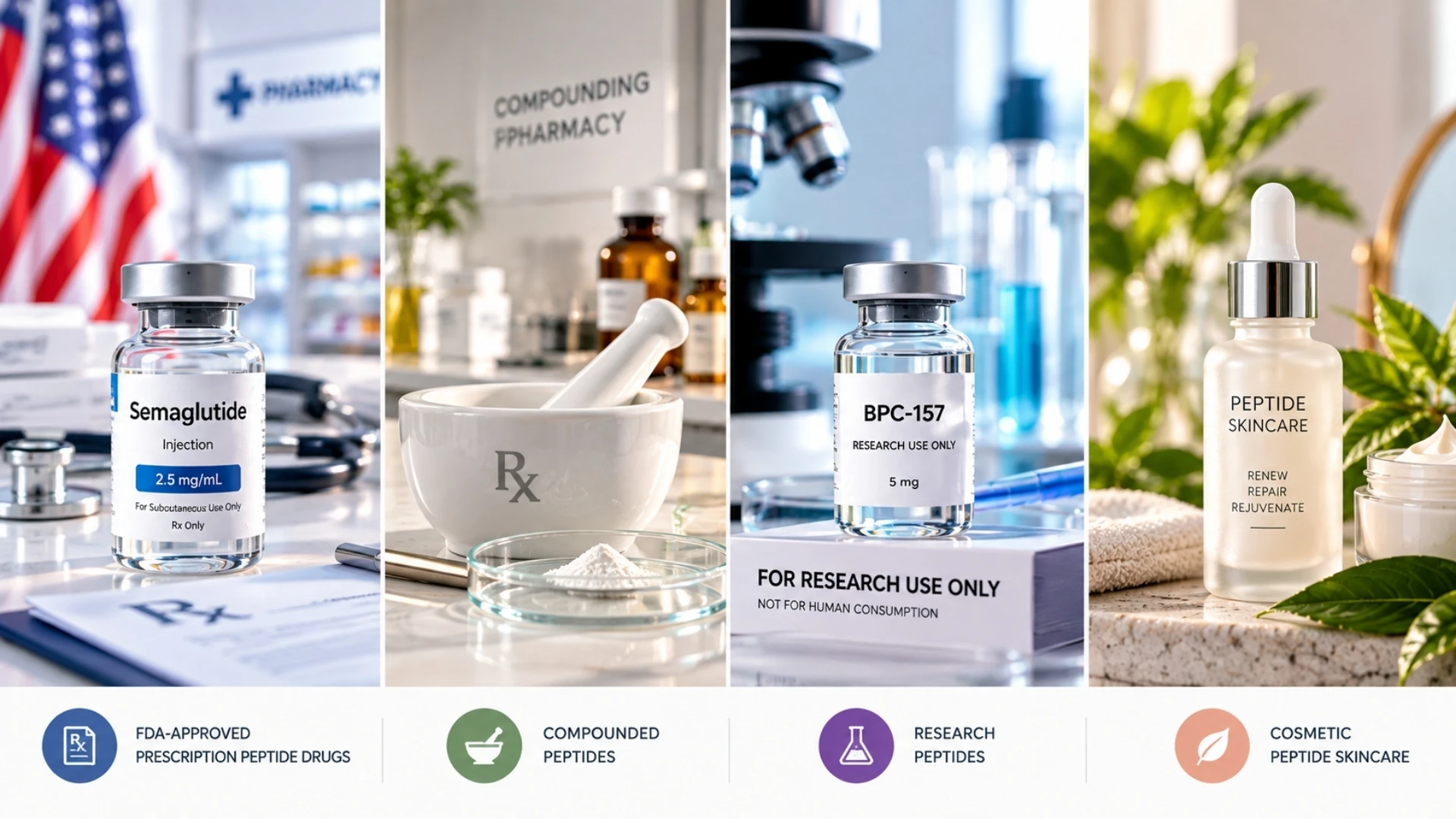
The Four Legal Categories of Peptides in the US
FDA-approved prescription peptide drugs
Research use only (RUO) peptides
So What Is Illegal When It Comes to Selling Peptides?
Do You Need a License to Sell Peptides?
Is It Legal to Sell Peptides in Canada?


Share via:
Quick Answer: Collagen supplements and peptide skincare are fully legal in both the US and Canada. Research peptides can be legally sold for laboratory research. Selling any peptide for human consumption without FDA or Health Canada authorization is illegal, no matter what your label says. And the July 2026 PCAC vote on BPC-157 and TB-500 did not legalize the sale of those compounds.
The peptide industry is growing really fast, and so is the confusion about what is actually legal.
So much of that confusion comes from a regulatory landscape that is complex, ever-changing, and full of grey areas you might accidentally stumble into. The result is that sellers who intend to operate legally end up with frozen merchant accounts, warning letters from regulators, or enforcement actions they never saw coming.
If you are already building a peptide business and want the full playbook on compliance, startup costs, and marketing, start with our guide on how to start a peptide brand.
This article specifically answers the question: Is it illegal to sell peptides?
So, Is It Illegal to Sell Peptides?
Well, the answer is not simply yes or no.
Selling peptides is not necessarily a crime. What is illegal is selling the wrong type of peptide, to the wrong buyers, with the wrong claims, without the right structure.
Here is the simplest way to understand it. The FDA classifies a product based on its intended use, not just what it is made of.
An example is BPC-157. This is the same compound sold to a university laboratory for cell research, but it is treated completely differently from the same compound sold to a gym member claiming it heals tendons. The molecule is identical; however, the legal status is not.
The moment your marketing implies human use or therapeutic benefit, the FDA considers your product an unapproved new drug, regardless of what your label says. Under the Federal Food, Drug, and Cosmetic Act, introducing an unapproved new drug into interstate commerce is a federal crime.
To ensure you sell peptides legally in the United States, you need to consider the four legal peptide categories.
The Four Legal Categories of Peptides in the US
FDA-approved prescription peptide drugs
These include semaglutide (Ozempic, Wegovy), tirzepatide (Mounjaro, Zepbound), and tesamorelin.
These compounds went through the full FDA New Drug Application or Biologics License Application approval process. That means years of clinical trials, safety data, efficacy data, manufacturing review, and post-market surveillance commitments before a single prescription was ever written.
These are legal to prescribe, dispense, and sell through licensed pharmacies with valid prescriptions. A licensed physician evaluates the patient, determines that the drug is appropriate, writes the prescription, and a licensed pharmacy fills it.
Selling an FDA-approved prescription drug without a valid prescription, dispensing it from an unlicensed facility, or promoting it to consumers for conditions it is not approved to treat is a crime under the Federal Food, Drug, and Cosmetic Act.
The fact that semaglutide and tirzepatide are household names in 2026 does not mean they are freely available. It just means more people are trying to circumvent the prescription requirement, which is exactly why the FDA and FTC have escalated enforcement in this category throughout 2025 and 2026.
Compounded peptides
Compounding is a legitimate medical practice in which licensed pharmacies prepare customized medications for individual patients. It exists because not every patient can tolerate the standard formulation, dosage, or delivery method of a commercially available drug.
A patient allergic to a specific filler ingredient, a child who needs a pediatric dose not commercially available, or a patient who requires a combination of two drugs not available as a single product are all situations in which compounding is relevant.
For peptides, access to compounding depends on the category the compound falls into. The FDA maintains a bulk substances list divided into category 1, which permits compounding, and category 2, which prohibits it
If a peptide is on the Category 1 list, a licensed 503A compounding pharmacy can prepare it for:
- An individual patient who has a valid prescription from a licensed physician
- The patient must have a clinical need
- The pharmacy must be operating within state and federal compounding laws
- The compound must also be appropriate for the specific patient
If a peptide is not in Category 1 or is still under evaluation, it cannot legally be compounded by licensed pharmacies.
Compounding pharmacies risk their DEA registration, their state pharmacy license, and federal criminal exposure for compounding outside the permitted framework.
Cosmetic peptide skincare
Peptide ingredients like copper tripeptide-1, palmitoyl tripeptide-1 (also known as Matrixyl), and acetyl hexapeptide-8 (commonly called Argireline) are legal cosmetic ingredients that have been used in skincare products for decades. They are regulated under the FDA's cosmetic framework, which was updated by the Modernization of Cosmetics Regulation Act of 2022 (MoCRA). They are not drugs, and they do not require FDA drug approval before launching.
This means that if you are developing a copper peptide serum or a peptide moisturizer, your regulatory obligations are product safety, honest labeling, and MoCRA compliance, rather than the pharmaceutical-level scrutiny that applies to drug products.
The compliance trap that most peptide skincare brands fall into is not the ingredients. It is the claims. A cosmetic can make appearance claims. It cannot make drug claims.
A claim is a drug claim if it implies that your product changes the structure or function of the body rather than just how it looks or feels. Things like:
- "Visibly reduces the appearance of fine lines" is a cosmetic claim
- "Stimulates collagen production" is a drug claim
- "For firmer-looking skin" is a cosmetic claim
The FDA has become more permissive with barrier-related language when it is framed in terms of appearance and feel rather than structural repair.
Collagen peptide supplements
Hydrolyzed collagen from bovine, marine, porcine, and chicken sources is Generally Recognized as Safe under FDA dietary supplement regulations.
This means the FDA recognizes collagen peptides as safe for use as dietary supplement ingredients based on their established history of use.
Under the Dietary Supplement Health and Education Act (DSHEA), you do not need FDA approval before selling a collagen supplement. You are responsible for product safety, manufacturing quality through a GMP-certified facility, and accurate labeling.
- You can say your collagen supplement supports skin elasticity, joint comfort, nail strength, or muscle recovery
- You cannot say it treats arthritis, reverses skin aging, or improves joint disease. Those are disease claims that would make your supplement an unapproved drug.
Every collagen supplement label must also carry the required DSHEA disclaimer in bold: "This statement has not been evaluated by the Food and Drug Administration. This product is not intended to diagnose, treat, cure, or prevent any disease."
Research use only (RUO) peptides
Synthetic peptides like BPC-157, TB-500, Ipamorelin, and CJC-1295 can legally be sold for laboratory research to qualified buyers. Universities, research organizations, biotechnology companies conducting pre-clinical research, and similar institutional buyers are the intended market.
A legitimate research peptide supplier:
- Sell in quantities appropriate for laboratory use
- Provide technical documentation including Certificates of Analysis, purity testing results, and material safety data sheets
- Their customers are institutions and credentialed researchers, not individuals who found them through a fitness podcast
- Their website does not include dosing protocols, injection guides, or testimonials about personal health outcomes
- Their customer service team does not advise on how to use the compound for human benefit
Note that not all research peptides are in the same regulatory position. GHK-Cu in topical form was moved onto the FDA's Category 1 list in May 2026, which means licensed compounding pharmacies can now compound it.
CJC-1295 remains classified as a developmental drug with no approved medical use, making it illegal for human use in any context. BPC-157 and TB-500 are in active regulatory review following the July 2026 PCAC vote but remain as unapproved new drugs in the meantime.
So What Is Illegal When It Comes to Selling Peptides?
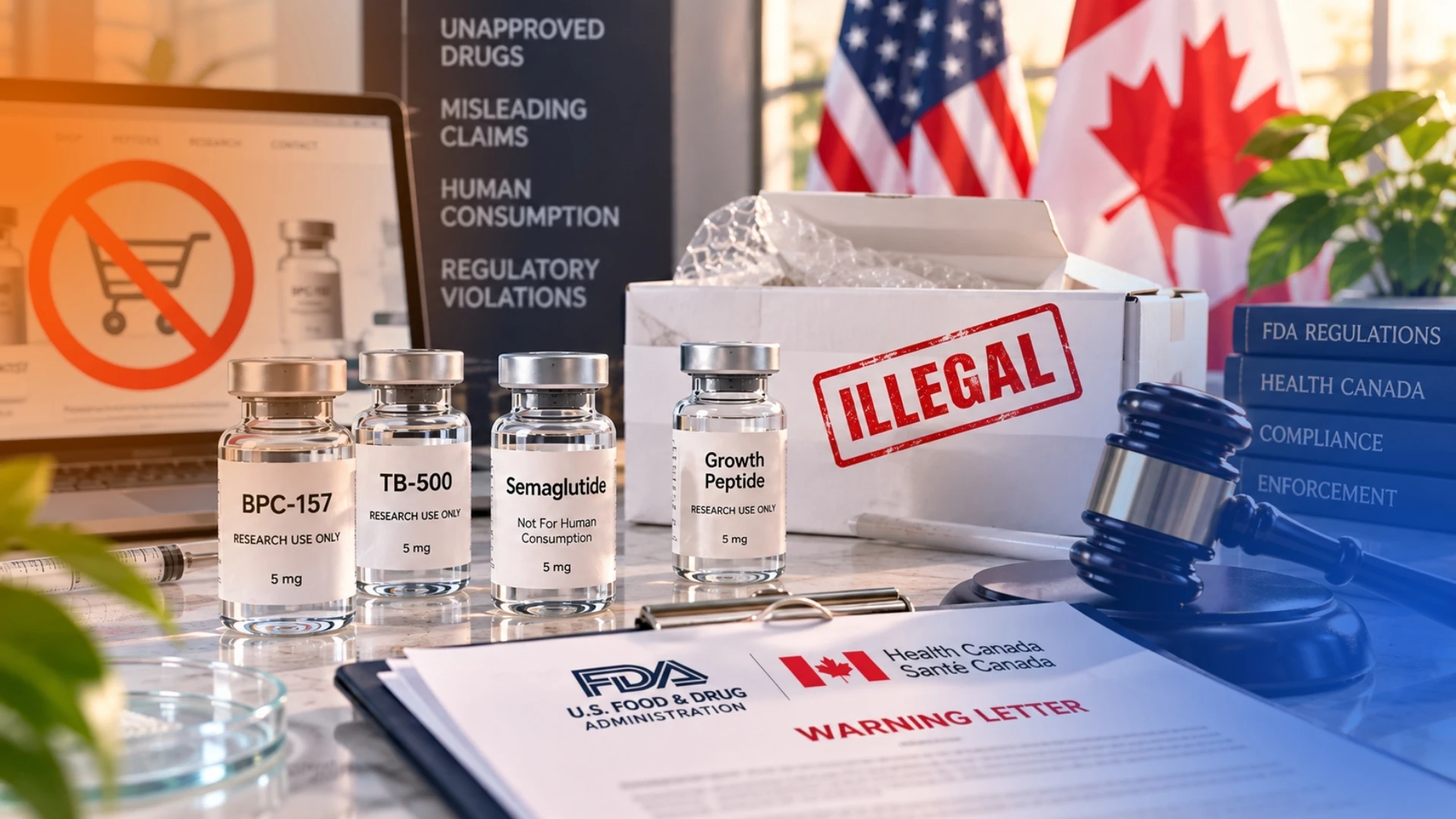
Selling any peptide compound with claims that it treats, prevents, or cures a medical condition makes it an unapproved drug.
Selling injectable peptides to consumers without a valid prescription from a licensed physician is illegal.
Selling peptides on a consumer-facing ecommerce website while maintaining the fiction that your customers are all laboratory researchers is called sham research use. If:
- Your checkout flow involves buying supplements
- Your marketing targets fitness enthusiasts and longevity seekers
- Your compound arrives in packaging that looks like a supplement; the research-use positioning is not credible.
Selling compounded peptides that are on the FDA's Category 2 list is illegal for compounding pharmacies and for anyone else. CJC-1295 remains classified as a developmental drug in 2026 regardless of other regulatory changes and is not legal for human use in any form.
Do You Need a License to Sell Peptides?
It depends on your business model. There is no single peptide seller license that covers all business types.
- Collagen supplement brands: No specific license is required beyond standard business registration. You need a GMP-certified manufacturer and DSHEA compliance. No pre-market FDA approval is required
- Peptide skincare brands: No drug license required. MoCRA compliance applies above certain thresholds. Small businesses with average annual gross US cosmetic sales under $1 million may qualify for some exemptions, but not if your products touch the eye area, are injected, are intended for internal use, or alter appearance for more than 24 hours. Verify with a regulatory professional before assuming you qualify
- Research peptide companies: No federal license is required to sell research chemicals for laboratory research. But your business registration must be current, your documentation, including Certificates of Analysis and supplier records, must be maintained, and your entire operation must consistently reflect research supply rather than consumer sales
- Telehealth peptide clinics: Every prescribing provider must hold a valid medical license in every state where they see patients. LegitScript certification is required before Google will approve healthcare-related paid search advertising. It also improves your options for getting a stable high-risk merchant account for payment processing. Check current pricing directly at legitscript.com before budgeting for this.
Is It Legal to Sell Peptides in Canada?
Injectable peptides are regulated as prescription drugs and must be authorized by Health Canada before they can be sold. It is the foundational rule that governs the entire injectable peptide category in Canada.
An authorized prescription drug in Canada has an eight-digit Drug Identification Number (DIN) on the label. That DIN is how Health Canada tracks and verifies that a drug has gone through the authorization process and meets Canadian safety, efficacy, and quality standards.
If a peptide product does not have a DIN, it is not authorized for sale in Canada as a drug. There are absolutely no exceptions for research labeling, how the product is described on the website, how it is packaged, or where it ships from.
On June 11, 2026, the Superior Court of Québec granted Health Canada a permanent injunction against Canlab Research and its representatives, preventing the Quebec-based company from manufacturing, testing, distributing, or selling unauthorized injectable peptides in Canada. The injunction also prohibits the company from advertising these products through any website or social media platform accessible with a Canadian IP address.
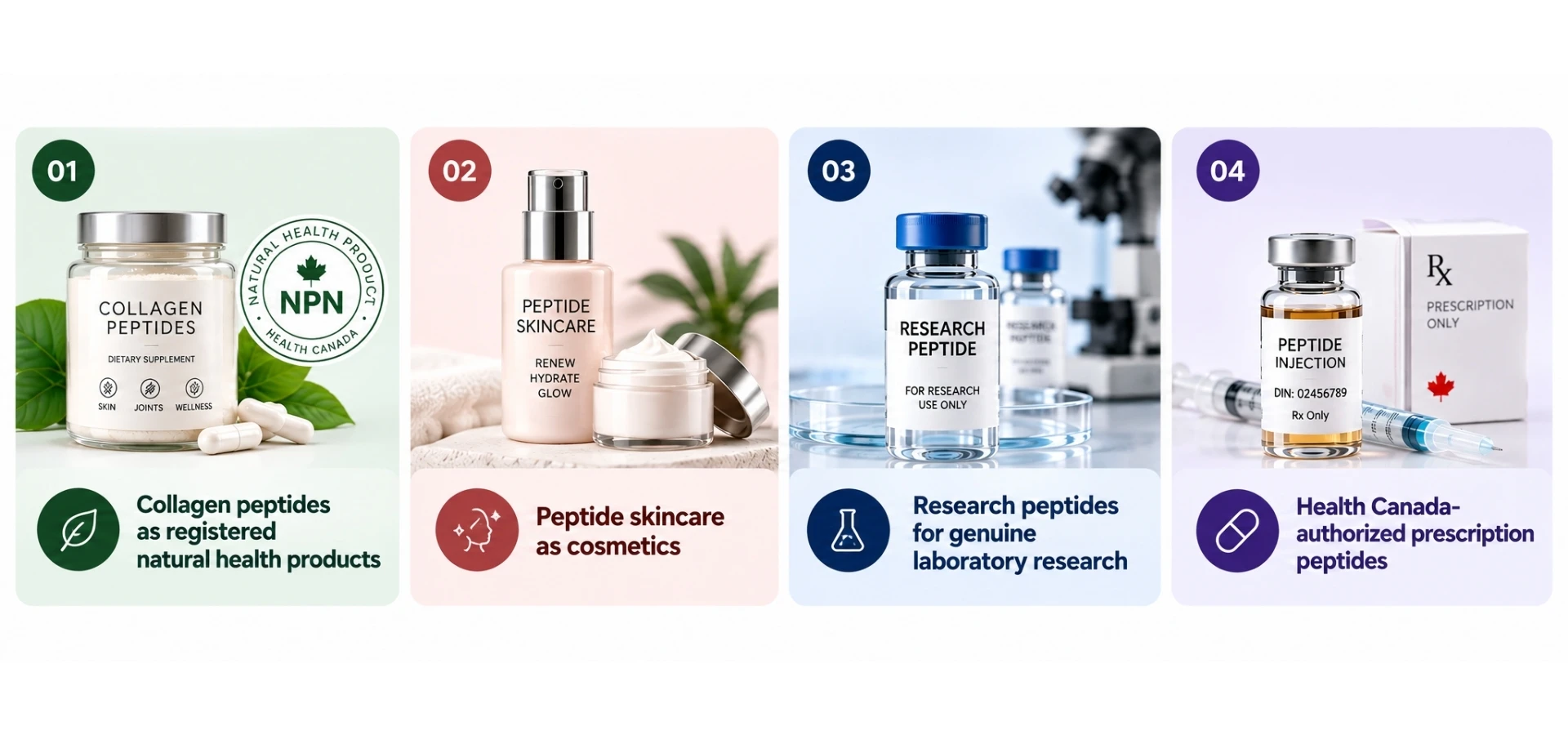
Here is what is actually legal to sell in Canada:
- Collagen peptides as registered natural health products: Collagen peptide supplements can be legally sold in Canada when registered with Health Canada as natural health products (NHPs). A registered NHP has a valid Natural Product Number on the label. The registration process requires submitting evidence of safety, efficacy, and quality to Health Canada before going to market
- Peptide skincare as cosmetics: Peptide-based skincare products classified as cosmetics under the Cosmetic Regulations can be legally sold in Canada. Brands must file a Cosmetic Notification Form with Health Canada within 10 days of first sale in Canada. Claims must be limited to cosmetic effects. Any claim that implies a therapeutic, medicinal, or drug-like effect reclassifies the product as a drug under Canadian law and triggers the full drug authorization requirement
- Research peptides for genuine laboratory research: As in the US, synthetic research peptides can legally be sold in Canada for laboratory research purposes to qualified institutional buyers. The same principles apply here. The RUO label alone is not sufficient protection. How the business operates, who the customers are, and what the marketing implies all determine whether the research use positioning will be credible to a regulator
- Health Canada-authorized prescription peptides through licensed pharmacies: FDA-approved peptide drugs that also carry Health Canada authorization can be legally dispensed through licensed Canadian pharmacies with a valid prescription from a licensed Canadian physician. The drug must have a DIN, the physician must be licensed to prescribe in the province where the patient is located, and the pharmacy must be licensed to dispense prescription drugs in Canada.
What Are the Penalties for Selling Peptides Illegally?
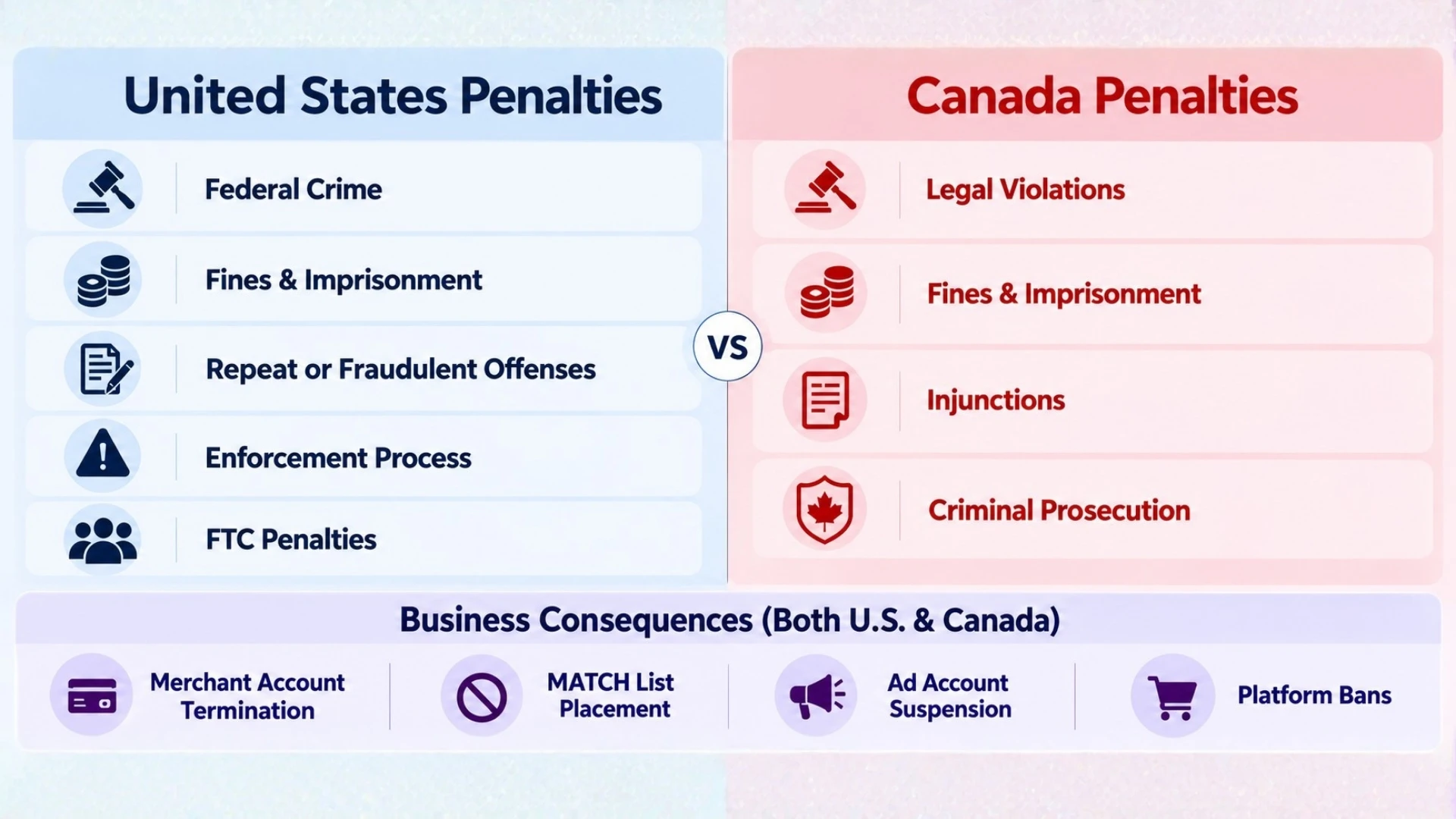
In the United States
Introducing an unapproved new drug into interstate commerce is a federal crime under the FD&C Act. First offenses can result in fines and imprisonment of up to one year.
Offenses committed with intent to defraud or mislead, or repeat offenses, can result in imprisonment of up to three years per count.
The FDA starts with warning letters, then moves to injunctions if violations continue, then to product seizure and criminal prosecution for the most serious cases.
The FTC enforces against unsupported health claims, imposing civil penalties of up to $51,744 per violation per day for ongoing conduct.
In Canada
Violations of the Food and Drugs Act can result in fines of up to $5 million and imprisonment of up to 2 years for serious violations.
Health Canada can seek injunctions through provincial superior courts. Health Canada can also refer matters for criminal prosecution and file for contempt if the terms of an injunction are violated.
Aside from the direct legal penalties, the business consequences are more immediate and severe:
- Merchant account termination can freeze your revenue for 90 to 180 days
- MATCH list placement can restrict your access to payment processing for 5 years
- Ad account suspension across Google, Meta, and TikTok removes customer acquisition overnight
- Platform bans from Shopify and other providers can force you to rebuild your entire operation from scratch
To avoid all this, you have to stop the illegal sale of peptides.
Final Thoughts
In a nutshell, collagen supplements and peptide skincare are accessible, legal, and growing fast, but research peptides can be sold legally for laboratory research.
If you want help building the marketing and ecommerce strategy for your peptide brand within these legal frameworks, book a free consultation with Pro Marketer. We work with supplement, skincare, and wellness brands to build digital systems that drive revenue growth without putting the business at risk.
FAQs
1. Is it legal to sell peptides for research purposes?
Yes, with conditions. Research peptides can legally be sold for laboratory research to qualified buyers like universities, labs, and research organizations. Your customers need to be actual research buyers, your website needs to be consistent with research supply throughout, and nothing on your platform can imply human use. Selling research-labeled peptides to consumers who inject them at home is not legal research use, regardless of the disclaimer.
2. Can you sell peptides as a dietary supplement?
Only certain peptides qualify. Collagen peptides have GRAS status and can legally be sold as dietary supplements in the US. Synthetic peptides like BPC-157, TB-500, and CJC-1295 are not lawful dietary supplement ingredients under DSHEA because they are synthetic compounds with no history of food use. The FDA considers them unapproved new drugs when marketed for human consumption, not supplements, regardless of how you label them.
3. Did the FDA make BPC-157 legal to sell in 2026?
No. The July 2026 PCAC advisory committee vote recommending BPC-157 for 503A compounding eligibility was advisory.
For BPC-157 to become legally available through licensed compounding pharmacies, the FDA must complete formal notice-and-comment rulemaking to add it to the 503A Bulks List. That process takes 8 to 12 months. Until rulemaking is complete, BPC-157 remains an unapproved new drug.
4. Is it legal to sell peptides in Canada?
Selling unauthorized injectable peptides in Canada is illegal.
Canada regulates injectable peptides as prescription drugs under the Food and Drugs Act and requires Health Canada authorization with a Drug Identification Number.
What is legal includes collagen peptides as registered natural health products, peptide skincare as cosmetics with CNF notification, and research peptides for genuine laboratory research.
5. Can you sell peptides on Shopify or Stripe?
It depends on your product category and positioning. Collagen supplement and skincare brands with compliant positioning can use mainstream platforms, though keyword detection can trigger reviews.
Research peptide companies and telehealth clinics almost always encounter problems with Stripe, PayPal, and Shopify because their product category triggers automatic platform compliance flags.
6. What are the penalties for selling peptides illegally?
In the US, selling an unapproved new drug in interstate commerce is a federal crime with penalties up to three years' imprisonment per count for willful violations. FTC civil penalties can reach $51,744 per violation per day for ongoing unsupported health claims.
In Canada, violations of the Food and Drugs Act can result in fines of up to $5 million and imprisonment of up to 2 years. Other business consequences include merchant account freezes, MATCH list placement that restricts payment processing for 5 years, ad account suspensions, and ecommerce platform bans.

.svg)

.avif)

.svg)