The Future of Google Ads: What Changes in 2027
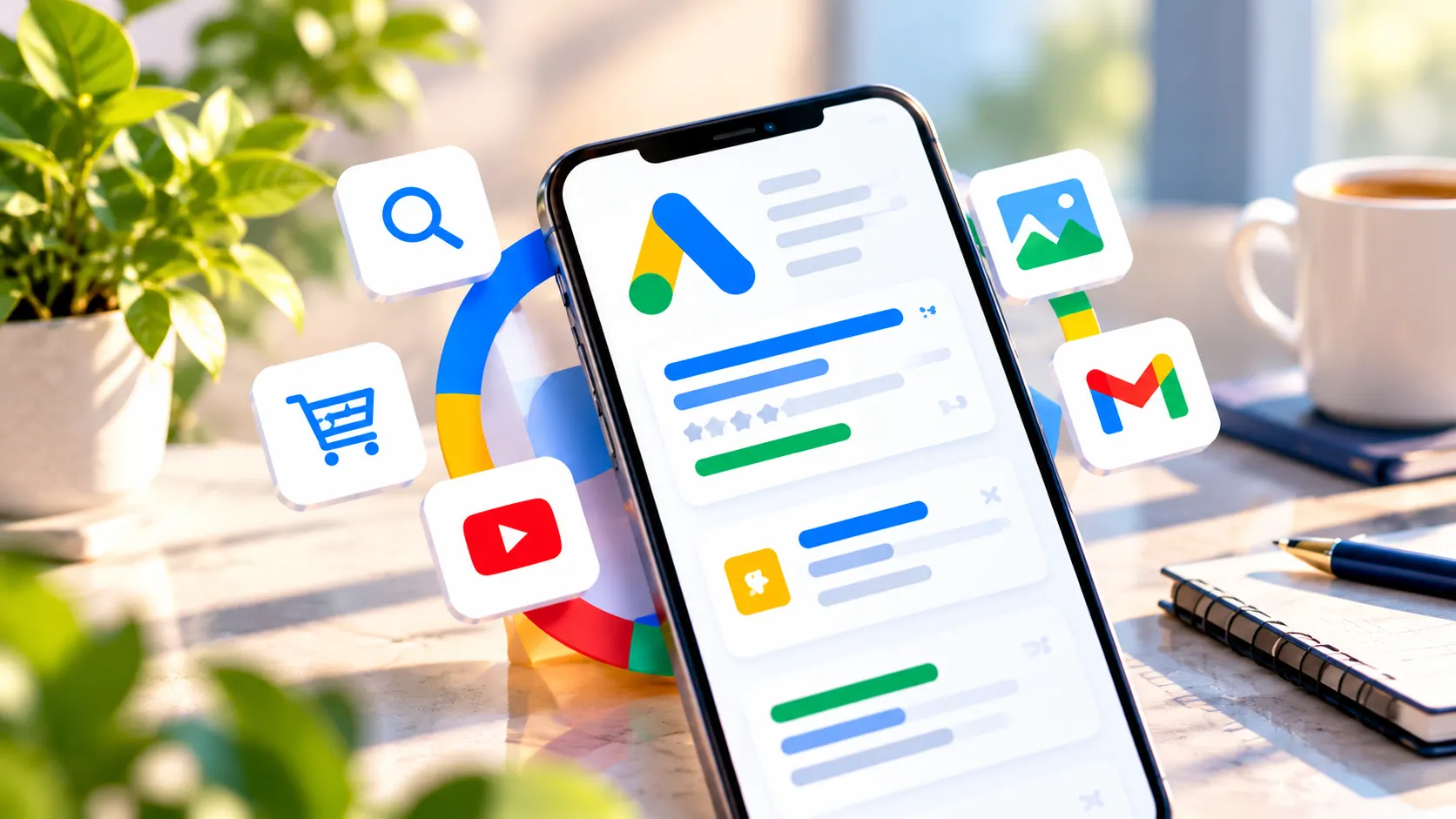
In 2027, Google Ads will rely more on AI. It will switch your old Dynamic Search Ads to a new tool called AI Max for Search, and it will move Display campaigns into Demand Gen. Your ads will also appear more in Google’s AI overviews and AI mode.
The world is changing because of advances in AI, and Google Ads is at the forefront. By this time next year, Google will be replacing Dynamic Search Ads with AI Max for Search. It will move Display campaigns into Demand Gen and put more ads in its AI answers.
If you run an ecommerce store, these Google Ads changes in 2027 will affect your budget, your keywords, and your reports. This guide explains the biggest Google Ads trends and what each one means for you. It shows what is confirmed, what is still being tested, and what to do before the deadlines.
First, Why Should You Care About The Future of Google Ads?
People now get answers from AI before they click a single link, and Google is moving your ads to follow them.
AI Overviews are available in more than 200 markets, and PPC Land reported that AI Mode had passed 75 million daily active users by February 2026. To reach these searchers, Google now shows ads above, below, and within AI Overviews, and is testing more ad types in AI Mode.
By this time next year, most of the changes above will be live or close to it. Some deadlines are fixed: new DSA and Display campaigns stop in January 2027, and the first DSA switches to AI Max begin in February 2027.
If you run an ecommerce store, three parts of your account will be affected.
Pick one to see what changes.
1. Your Budget
New campaign types and new placements change where your money goes. Four changes influence this:
Google’s new channel controls, announced on October 14, 2026, help here. You can mark channels as high or low priority and cap low-priority channels at a share of your daily budget.
2. Your Keywords
In the past, a keyword set the limit of where your ad could show. With AI Max and broad match, a keyword becomes a hint about what you sell, and Google can show your ad for related searches you never listed, or for searches with no keyword attached at all.
This also affects the page a potential buyer lands on. With final URL expansion, Google can send people to a different page on your site than the one you chose.
Your keywords still tell Google what your business sells, but negative keywords will become more important, because they are the best way to block searches you never want.
3. Your Reports
Ads in AI answers do not get their own report, so you will see less detail about where your ads ran. Google counts ads in AI Overviews as Top ads and does not separate them in reporting. You also cannot opt out of them or target AI Overviews alone.
In AI Mode, Google has started testing ads for people who connect their apps through Personal Intelligence. Advertisers cannot see those connected apps.
A new report planned for later in 2026 will show the search term, the ad the person saw, and the landing page in one view. Until it arrives, check your search terms and landing pages reports every week.
Where’s Google Ads Heading In 2027?
This is the future of PPC: You set the goal and give Google your product data and creative. Google's AI then does more of the matching and bidding.
Google moved AI Max out of beta on April 15, 2026, and says hundreds of thousands of advertisers already use it. DSA, automatically created assets, and the campaign-level broad match setting will all switch to it.
Broad match and keywordless targeting now do more of the work of finding searches.
Google announced in May 2026 that Display moves into Demand Gen. The Google Display Network remains, but you will buy it through Demand Gen.
A wrong target now costs you more, and new budget controls give you more say over where spend goes.
Ads can already appear in AI Overviews, and Google is testing new ad types in AI Mode.
Google Ads already uses a lot of automation, and in 2027 it will use even more. At Google Marketing Live 2026, Google said the way to excel in the AI era is to use AI. The idea behind this is that AI will do more of the work while you focus on strategy.
Most Google Ads trends today follow this same pattern.
PPC Trends 2026: What the Data Shows
Although cost per click kept rising, cost per lead fell for the first time in five years. PPC Land says advertisers are getting more leads per click, not paying less per click.
WordStream's 2026 benchmarks cover 13,000+ search campaigns across 23 industries, from April 2025 to March 2026, across Google and Microsoft Ads.
With that baseline in place, the first and biggest change to understand is AI Max.
Trend 1: AI Max for Search Replaces Dynamic Search Ads
DSA built ads from your website without a keyword list. AI Max does the same, with more signals and more controls.
What AI Max Does
Your guardrailsAI Max for Search is the biggest change for Search advertisers going into 2027. It is a set of AI features that work inside your Search campaigns, and Google calls it the next generation of DSA.
Google does not leave all of this to the AI, though. You also get brand controls, location controls, and text guidelines. A tool called AI Brief lets you guide AI Max in your own words. It is still in closed beta, and Google is adding more languages, including French.
What AI Max Does to Your Results
Google says campaigns that use all three features get an average of 7% more conversions or conversion value at a similar CPA or ROAS. There are two catches.
The 7% compares the full feature set to search term matching alone, and it only covers non-retail advertisers. It may not apply to your ecommerce store.
The takeaway: test AI Max before Google switches you over. Google's one-click experiments let you compare it with your current setup first.
AI Max also changes the role of keywords, which is the next trend.
Trend 2: Keywords Become Hints, Not Rules
Keywords still matter, but they now work more like hints than rules. Google says AI Max uses your ads, your website content, and other signals to find searches you did not think to target.
How Each Match Type Behaves
One detail matters if you mix match types. Google Ads Liaison Ginny Marvin said an exact match keyword will not stop the same keyword in broad match from showing in an AI Overview, because exact match is not allowed there.
What to Do
- Keep your best keywords. They tell Google what you sell.
- Add negative keywords for searches you never want.
- Use brand controls and text guidelines to protect your voice.
- Check your search terms and landing pages reports every week. Google's AI Max reports now show which search terms and landing pages AI Max used.
- Watch final URL expansion closely. You can turn off text customization and final URL expansion separately, at the campaign level.
Trend 3: Fewer Campaign Types, More Automation
Google is cutting the number of campaign types you manage and putting more of the work inside the ones that stay.
Display Moves Into Demand Gen
Performance Max Stays the Cross-Channel Pick
Google says Performance Max remains the go-to for cross-channel performance. It is also one of the campaign types Google tells advertisers to build on to get ready for new AI ad formats.
AI Max Comes to Shopping
Google launched AI Max for Shopping on April 30, 2026. It uses your Merchant Center feed to write ad copy, match pages, and choose between text ads and Shopping ads. You can switch in one click and keep your product targeting and bidding controls.
Demand Gen also reaches more places. It runs on YouTube, Discover, Gmail, Maps, and the Display Network, and at Marketing Live 2026 Google added Demand Gen ads on Google Maps.
Better data helps here too. Google's own analysis found that advertisers who build data strength with Google Tag Gateway get over 20% more conversions on average in Demand Gen. That is Google's claim, so test it on your own account.
Trend 4: Smart Bidding Follows Targets More Closely
Smart Bidding will stick to your targets more tightly, so a wrong target will cost you more.
Budget-Limited Campaigns Changed in August 2026
The rollout began on August 17, 2026 and finished on August 27, 2026. It covers Search, Shopping, Performance Max, Demand Gen, and Travel campaigns, plus Target CPC in Demand Gen.
Google says this will not raise your spend, because your budgets still apply, and it will not change your targets for you.
New Budget Controls
On October 14, 2026, Google announced channel prioritization and budget allocation. You can mark channels as high or low priority, and you can cap low-priority channels at a share of your daily budget.
Google says this works on a best-effort basis. It will roll out over the coming months across Search, Shopping, Performance Max, and Demand Gen.
Give Bidding Good Data
Smart Bidding only learns from the conversions you track. Track real orders, pass real values, and review your targets after every big change.
Trend 5: Ads Move Into AI Overviews and AI Mode
Ads already show in AI Overviews, and Google is testing more ad types in AI Mode. This trend changes where your customers will see you.
AI Overviews: What Is Live Today
Tap an ad slot to see the rules.AI Mode: What Is Being Tested
Your product, inside the list
What Comes Next
AI Mode shopping ads place your products inside the conversation. Google is also growing a pilot called Direct Offers, which lets brands show deals in AI Mode. Brands like Chewy, Gap, and L'Oréal have used it since January 2026.
Two more ad types will come to regular Search in the coming months: AI-powered Shopping ads let Gemini write a short explainer for each product, and Business Agent for Leads puts a chat agent inside the ad.
To get ready, Google says to build on AI Max for Search, AI Max for Shopping, and Performance Max. For Shopping ads, keep your product feed up to date: descriptions, prices, promotions, shipping and returns, and images and video.
If you sell health-related products, check Google's policies first. Our guide to Google Ads for peptides covers the account rules that come before any of this.
Other Google Ads Changes to Plan For
These smaller updates will not make headlines, but they will shape your day-to-day work.
Google says it will add one view that shows the search term, the ad the person saw, and the page they landed on. It promised more details later this year.
One AI agent that works across Google Ads, Analytics, Merchant Center, and Google Marketing Platform, meant to help with setup and analysis.
Google's creative tool can turn your brand guidelines into ad creative. Check everything it writes before it goes live.
Google is adding a Data Strength Uplift metric to Google Ads, and bringing enhanced conversions to Display & Video 360 and Google Analytics. Better data helps bidding work better.
Key Dates: What Happens When
Now that you have seen every change, the next step is putting them on a calendar.
Campaigns that use automatically created assets (ACA) or the campaign-level broad match setting switch to AI Max.
Check which campaigns changed and review your search terms.
Google plans a new AI Max report that shows search terms, ad assets, and landing pages in one view.
Watch for the details. Google says they are coming later this year.
You can no longer create new DSA campaigns or new standalone Display campaigns.
Finish any DSA or Display tests before then.
Google starts switching the remaining DSA campaigns to AI Max. Search campaigns that use the Display Network lose the current spend setup.
Switch on your own schedule first. Set a Display spend rule.
Google moves the remaining Display campaigns into Demand Gen. It has not given a date.
Move your Display campaigns yourself and test the result.
DSA campaigns will not disappear overnight. When Google switches one, its dynamic ad groups become standard ad groups, all three AI Max features turn on, and your URL controls stay in place. Google recommends switching yourself first so you keep control of your setup.
Checklist: What to Do Before 2027
Start with the changes that have deadlines, then move on to the ones that grow your reach.
Audit What You Have
Get Ahead of the Deadlines
Strengthen Your Data and Feed
Build a Weekly Habit
The direction of Google Ads is clear: more AI, fewer campaign types, and more ads inside AI answers.
The dates are set, and the brands that test early will keep more control. Do not wait for Google to make the switch for you. Review your DSA, Display, and broad match campaigns now, and set up your goals, data, and guardrails before 2027.
If you want help, Pro Marketer's media buying team manages Google, Meta, TikTok, and Amazon ads for ecommerce brands. Comparing partners? Read our list of the best Google Ads agencies in Canada. When you are ready, book a free consultation and we will look at your account with you.
Book a free consultation →FAQs
No. Google is not ending Google Ads, but it is changing how campaigns are built. In 2026, Google moved AI Max for Search out of beta, said it will move Display campaigns into Demand Gen, and added ads to AI Overviews and AI Mode. Expect fewer manual controls and more AI doing the matching and bidding.
AI Max for Search. Google says it will start switching DSA campaigns to AI Max in February 2027, and you will not be able to create new DSA campaigns from January 2027. Campaigns that use automatically created assets or the campaign-level broad match setting started switching in September 2026. When Google switches a DSA campaign, its dynamic ad groups become standard ad groups, all three AI Max features turn on, and your URL controls stay in place. You can switch early to keep control.
Yes, but they work as hints, not rules. Exact and phrase match keywords can still show ads above or below AI Overviews. Only broad match and keywordless targeting can show ads inside them. In AI Max, search term matching can reach searches beyond your keyword list. Keep your main keywords, add negative keywords, and put more effort into your conversion data and product feeds.
Yes. Ads can show above, below, and inside AI Overviews. Ads inside them are live in English in 12 countries, including Canada and the US, but not for sensitive industries like healthcare. You cannot opt out, and Google does not report them separately. In AI Mode, Google started showing Shopping ads in February 2026, and it is testing new ad types like Conversational Discovery ads and Highlighted Answers.
Neither wins every time. Performance Max runs across Search, YouTube, Maps, Gmail, and Discover from one campaign, and Google calls it the go-to for cross-channel performance. Search campaigns with AI Max give you more control over search intent, brand rules, and text guidelines. Both can show ads in the new AI spots. Run an experiment with your own sales data to see which one earns more for you.
Often yes, if you track real sales and know your margins. WordStream's 2026 benchmarks show an average cost per click of $5.42, a conversion rate of 8.18%, and a cost per lead of $66.69. Cost per lead also fell for the first time in five years. Start with one campaign, a small budget, and clean conversion tracking. If you want a partner, our guide to the best Google Ads agencies in Canada puts agency fees at $1,000 to $5,000 a month, depending on scope and ad spend.


Ami Okorie
Content Writer
Ami Okorie
Content Writer
Ami Okorie is a content writer at Pro Marketer. She helps e-commerce and DTC brands blend strategic copywriting with storytelling. With an eye for strategy and storytelling, she builds content engines that boost visibility, engagement, and sales.