
.webp)
TABLE OF CONTENTS
What Is the Amazon Ranking Algorithm?
What A10 is and what Amazon says
Amazon A10 Algorithm Ranking Factors in 2026
- Conversion rate
- Sales velocity
- Keyword relevance and indexing
- Click-through rate (CTR)
- External traffic
- Seller authority and account health
- Price and Buy Box eligibility
- Reviews, ratings, and review quality
- Prime eligibility and fulfillment method
- Inventory availability
How Alexa for Shopping and COSMO Are Changing Amazon Search in 2026
How to Improve Your Amazon Search Ranking in 2026
Fix your conversion rate before you do anything else
Build keyword coverage across your title, bullets, and backend
Drive external traffic using Amazon Attribution tags
Use PPC strategically, not as a ranking substitute
Invest in A+ Content and listing quality
- What factors affect Amazon product ranking the most?
- How can I improve my Amazon search ranking?
- Does Amazon use AI or machine learning to rank products?
- How often does Amazon update its ranking algorithm?
- Does external traffic from Google, TikTok, or Meta ads affect Amazon ranking?
- How long does it take for a new product to rank on Amazon?


Share via:
Quick Answer: The Amazon ranking algorithm is the system Amazon uses to decide which products appear first when a shopper searches for something. It evaluates keyword relevance, conversion rate, sales velocity, external traffic, seller health, and customer satisfaction to determine which products get visibility and which ones do not. Most sellers call the current version A10, though Amazon has never officially used that name.
Every time someone types a search into Amazon, the algorithm makes thousands of decisions in less than a second. It decides which products show up, in what order, on which page, and which ones never get seen at all.
Most sellers know the algorithm exists, but very few understand how it works.
The good news is that the algorithm is not a mystery. It follows logic. It rewards specific behaviours.
And once you understand what it is looking for, you can build your entire Amazon strategy around it.
This article explains how the Amazon ranking algorithm works in 2026, what changed between A9 and what sellers now call A10, what the major ranking factors are, how Amazon's new AI systems are changing the way products get discovered, and what you can do right now to improve your rankings.
What Is the Amazon Ranking Algorithm?
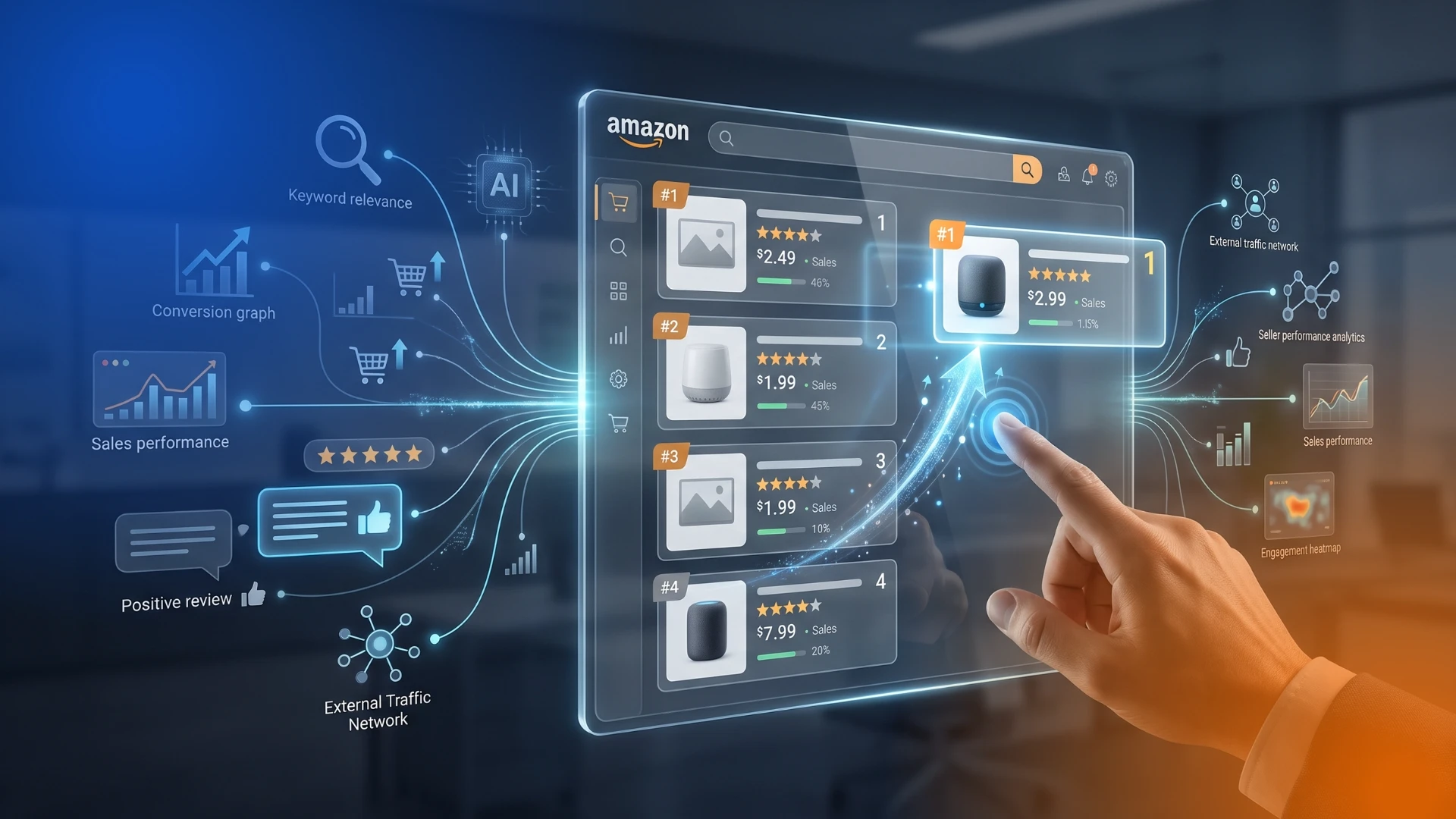
The Amazon ranking algorithm is the system that decides which products appear when a shopper searches on Amazon, and in what order. Its job is to show the shopper the product they are most likely to buy.
Amazon does not publish the exact mechanics of how it works. It never has. But years of seller data, platform behaviour, and observable ranking patterns have given the industry an understanding of what the algorithm measures.
The process works in two stages every time a search is made.
The first stage is matching
Amazon's system scans every product in its catalogue and identifies all the listings that contain words relevant to the search query. This is called the match set.
A product that does not contain the search term anywhere in its listing, its title, bullet points, description, or backend search terms will not appear in results at all.
NOTE: Keyword relevance is the entry requirement. Without it, nothing else matters.
The second stage is ranking
Once the match set is identified, Amazon sorts those products using a machine-learned rank function.
At this stage, the algorithm measures conversion rate, sales velocity, click-through rate, price, reviews, seller health, external traffic signals, and more.
The important thing to understand is that these two stages serve completely different purposes. Keywords get you into the match set. Performance gets you to the top of it.
Most sellers spend all their time on keywords and neglect performance.
A9 vs. A10: What Changed?
What A9 was
A9 was Amazon's original search algorithm. It focused on two things: keyword relevance and sales velocity.
If your listing contained the right keywords and your product sold consistently, the algorithm rewarded you with visibility.
Pay-Per-Click (PPC) campaigns contributed to ranking because they increased sales volume, and more sales meant higher velocity, which meant higher organic rank.
At the time, Amazon was growing fast, and its main goal was to connect buyers with in-demand products. That means sales velocity was an indicator of demand. Keywords were also an indicator of relevance.
What A10 is and what Amazon says
Amazon has never officially named or confirmed an algorithm called A10. There is no press release, official documentation, or public announcement.
What the seller community calls A10 is shorthand for the changes Amazon has made to its ranking system since approximately 2020.
Those changes can be found below:
Organic sales took over PPC-driven sales
Under A9, any sale was a good sale from a ranking perspective. But under the current system, Amazon distinguishes between sales generated by Sponsored Ads and sales generated organically.
Organic sales indicate demand. They tell the algorithm that customers searched for something, found your product without being pushed to it by a paid placement, and bought it. That signal carries more ranking authority than a sale that required paid promotion.
This does not mean PPC is useless.
PPC is still how new products build the initial velocity they need to rank. But PPC alone no longer drives organic ranking the way it once did.
You should use PPC to generate initial sales, convert those customers into organic repeat buyers, and let the organic performance increase over time.
External traffic became a ranking signal
When a customer clicks a link from outside Amazon (from a Google ad, a TikTok post, a Meta campaign, or an influencer's blog), follows that link to your Amazon listing, and completes a purchase, the algorithm reads that as a good market demand signal.
External traffic is estimated to contribute approximately 15% to 20% to ranking authority for brands that drive it consistently.
Amazon reinforces this through the Brand Referral Bonus program, which pays brand-registered sellers an average credit of approximately 10% back on sales generated by external traffic that are tagged with Amazon Attribution links.
Seller authority and account health became ranking factors
The current Amazon ranking algorithm evaluates your seller performance:
- Your Order Defect Rate
- Late Shipment Rate
- Customer service response times
- Feedback score
- Return rate
All these contribute to what is broadly called seller authority. A seller with a good account health record gets a better ranking than a seller with a poor account health record.
Conversion rate became the main performance signal
Under A9, sales velocity was the primary performance metric, but under the current system, conversion rate has more impact.
The average conversion rate across Amazon is approximately 9.8%.
- Products converting below 10% struggle to rank regardless of how well their keywords are optimized
- Products converting above 15% are in the top tier for most categories
If shoppers are clicking your listing and not buying, something is wrong. Either the listing does not match what they expected, the price is too high, the images are not convincing, or the reviews are not good enough.
The sad thing is, the algorithm does not wait for you to figure out why they aren’t buying. It simply demotes your product and promotes the ones with better conversions.
AI and semantic search are now part of the traditional ranking system
In 2024, Amazon launched Rufus, its generative AI shopping assistant, and deployed COSMO (Common Sense Knowledge Generation and Serving System) across search relevance and recommendations.
By early 2026, Rufus had over 250 million users with more than 210% interactions year over year. Amazon's Q4 2025 earnings confirmed Rufus generated nearly $12 billion in incremental annualized sales.
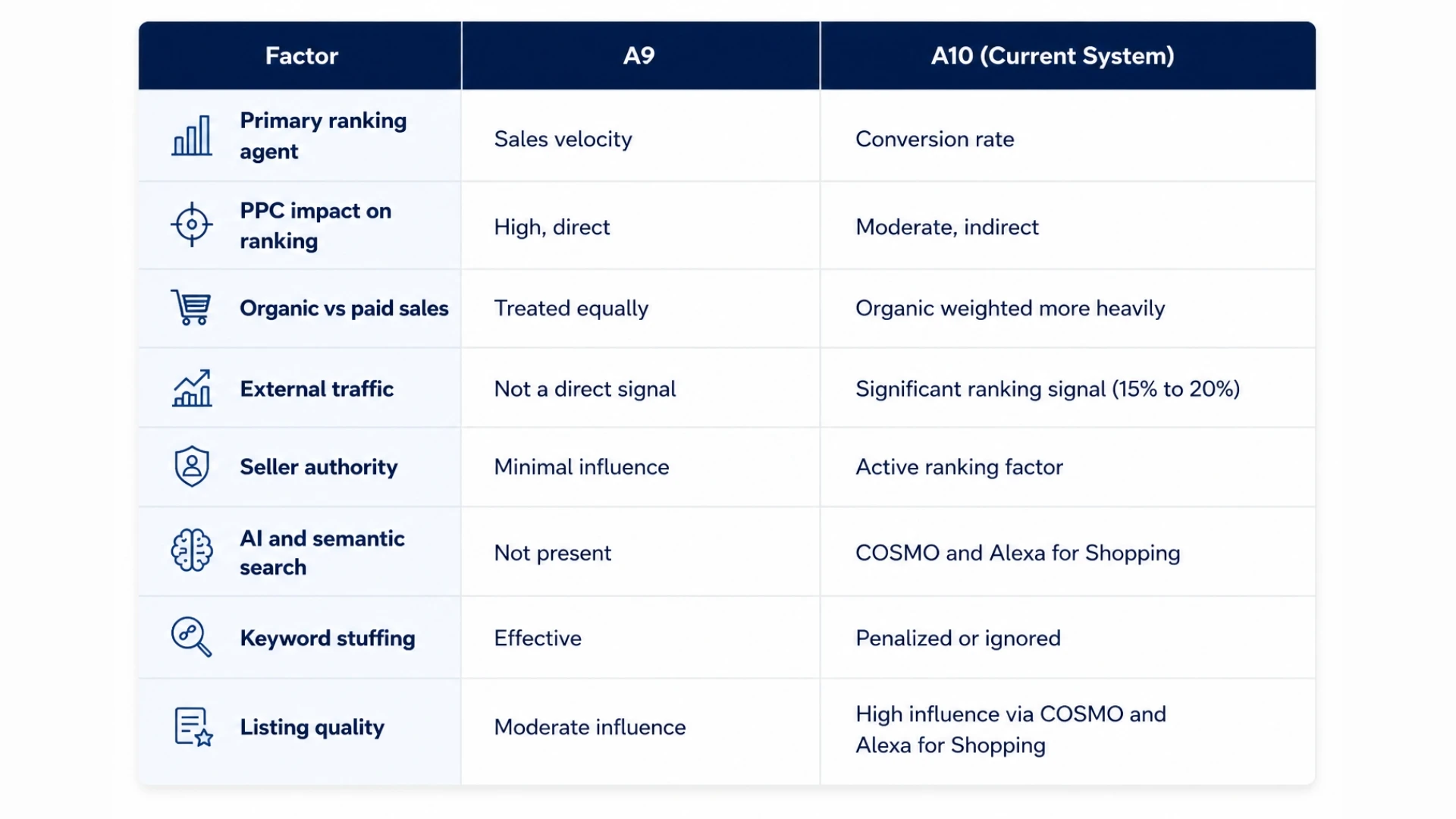
Here is the comparison between A9 and the current system:
Amazon A10 Algorithm Ranking Factors in 2026

Here are the specific factors that increase product ranking on Amazon in August 2026, based on consistent patterns across seller data, agency reporting, and platform behaviour.
1. Conversion rate
Conversion rate, also called unit session percentage in Seller Central, is the percentage of shoppers who visit your listing and buy. It is recognized as a really good performance signal in the current Amazon ranking algorithm.
The average Amazon conversion rate is approximately 9.8%. If you are below 10%, no amount of keyword optimization will compensate for low conversion.
If you are above 15%, you are in the top tier for most categories, and the algorithm will actively reward your listing with better placement.
Conversion rate is affected by your images, your price, your bullet points, your A+ Content, and how accurately your listing represents the product. All of these are within your control.
2. Sales velocity
Sales velocity measures how consistently your product sells over time. It is always better to have sustained daily sales rather than promotional spikes.
A product selling five units every day will outrank a product that sells fifty at a go and then makes zero sales for a week.
Ideally, you’d need approximately 25 or more sales per month per keyword to rank for a particular term.
3. Keyword relevance and indexing
Keywords determine whether your product appears in search results. Therefore, you should add keywords in your title, bullet points, product description, and backend search terms.
Backend search terms are invisible to buyers but visible to the algorithm. They should contain relevant keywords that did not fit naturally into your visible listing copy.
Right now, COSMO has moved Amazon from lexical matching, where the algorithm looked for exact word matches, to semantic understanding, where it interprets intent.
For example, a search for "shoes for a wedding" no longer just surfaces products containing those exact words. Instead, the system infers the buyer wants formal dress shoes and shows that result.
This simply means keyword density is no longer as important as it used to be. Clear, natural language that accurately describes your product, who it is for, and how it is used matters more.
4. Click-through rate (CTR)
Click-through rate measures how often buyers click your listing when it appears in search results.
A high Click-through rate (CTR) tells the algorithm that your product is relevant and appealing to people searching that term.
A low CTR tells the algorithm that your listing is appearing for the right search but not compelling enough to click. The algorithm responds to this by showing your listing less often.
Now you should know that CTR is driven by your main image, your title, your price, and your review count and star rating.
Your main image should show the product against a white background with the product filling at least 85% of the image space.
Your title should lead with the most important information, typically the brand name, product type, and key feature.
5. External traffic
Driving traffic to your Amazon listings from platforms like Google Ads, Meta, TikTok, Pinterest, influencer content, or email marketing sends a market demand signal to the Amazon ranking algorithm.
The algorithm interprets the external traffic as evidence that your brand has demand outside Amazon.
Amazon reinforces this with the Brand Referral Bonus. Brand-registered sellers who use Amazon Attribution tags to track external traffic earn an average credit of approximately 10% back on sales those campaigns generate.
The attribution tags are free to create in Seller Central. The bonus applies across most product categories and is paid as a credit against future referral fees.
6. Seller authority and account health
Seller authority is built from your Order Defect Rate, your Late Shipment Rate, your customer service response time, your feedback score, your return rate, and your policy compliance history.
Sellers with good account health records get better ranking. Sellers with high defect rates, frequent late shipments, or policy violations see their listings deprioritized even when the product itself performs well.
Try to keep your Order Defect Rate below 1%, your Late Shipment Rate below 4%, and your Pre-Fulfillment Cancel Rate below 2.5%.
7. Price and Buy Box eligibility
Price influences conversion rate, which directly influences ranking. Products priced within the top 25% of their category perform best in most cases.
The lowest price is not always the best-performing price if it suppresses conversion due to low quality.
The Buy Box is the default purchase option on a product detail page. It means your listing is the one customers add to their cart by default.
Losing the Buy Box to another seller means your listing gets bypassed even when a shopper is on your product page. Buy Box is determined by price, fulfillment method, seller metrics, and inventory availability.
Fulfillment by Amazon (FBA) sellers have an advantage in Buy Box competition because Amazon's fulfillment reliability contributes to eligibility scoring.
8. Reviews, ratings, and review quality
Your review count, average star rating, and review quality all contribute to ranking. More reviews generally improve conversion rate, which improves ranking.
A higher average rating improves click-through rate, which improves ranking.
Review quality, meaning the substance of what reviewers write, now feeds into how COSMO and Alexa for Shopping interpret your product's relevance for specific use cases.
A product with 200 reviews of 4.7 stars will outperform an equivalent product with 20 reviews of 4.5 stars in both click-through rate and conversion rate.
9. Prime eligibility and fulfillment method
Products fulfilled by Amazon (FBA) rank better than products fulfilled by merchants (FBM) for most categories.
FBA products guarantee fast shipping, are Prime eligible, and benefit from Amazon's fulfillment reliability.
All of these factors improve conversion rate, which improves ranking. FBA also removes the fulfillment-related seller metrics risk that sellers encounter.
10. Inventory availability
Running out of stock is one of the fastest ways to destroy a ranking you have spent months building.
A stockout removes your product from search results entirely. When your inventory is restored, you re-enter the ranking system from a weak position rather than picking up where you left off.
Plan your inventory replenishment cycles around high-velocity periods, including Prime Day, Black Friday, and Cyber Monday.
How Alexa for Shopping and COSMO Are Changing Amazon Search in 2026
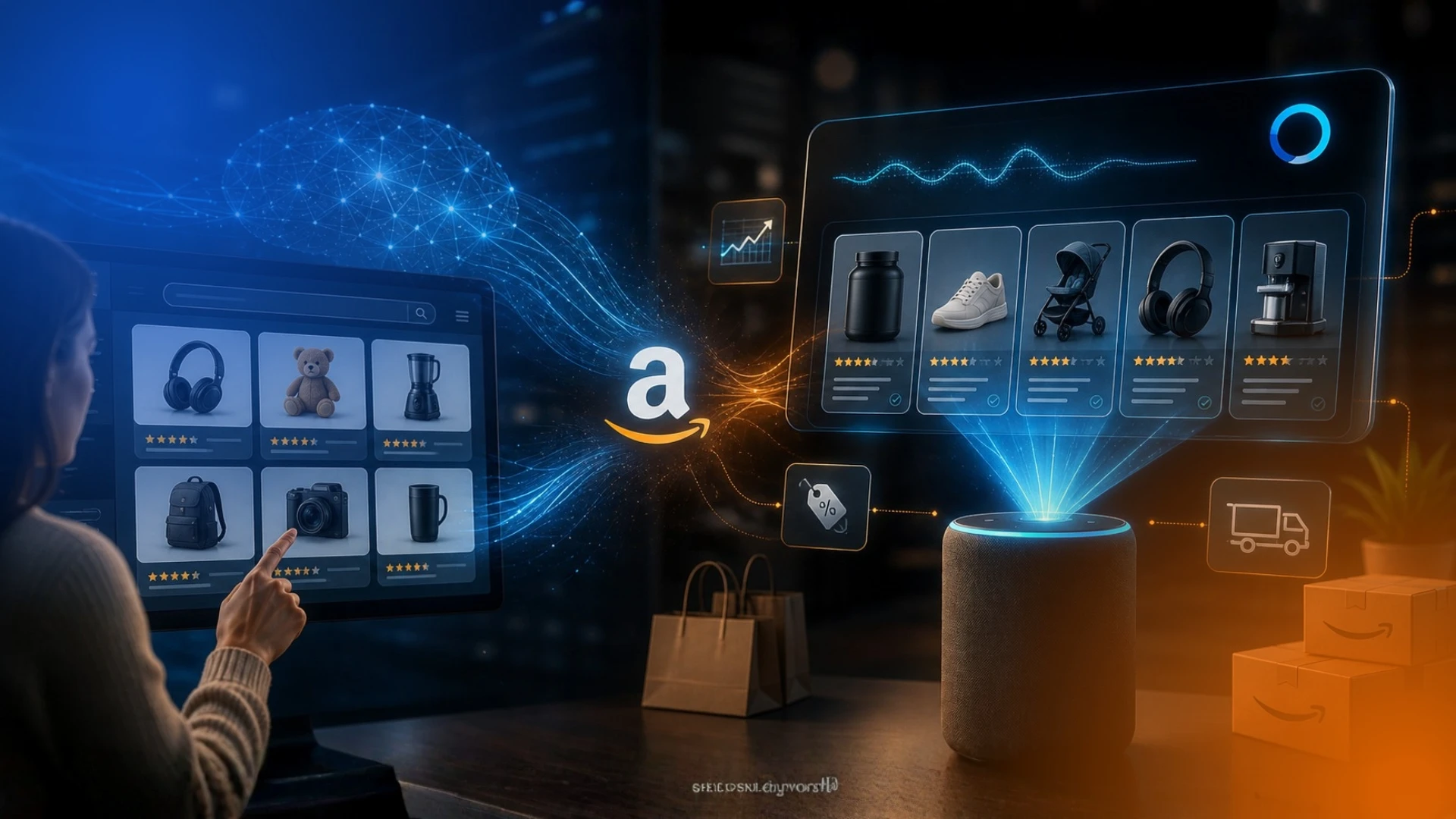
The Amazon ranking algorithm has always been the foundation of product discovery on the platform.
COSMO
COSMO stands for Common Sense Knowledge Generation. It is Amazon's AI system deployed across search relevance, recommendations, and navigation.
COSMO does not replace the traditional ranking algorithm. Instead, it changes how Amazon interprets the relevance of your Amazon listing.
Before COSMO, Amazon matched products to searches based on exact or near-exact keyword matches. The system looked for the words in your listing that matched the words in the search query.
COSMO changed this to semantic understanding. It now interprets what a buyer means by their search. For instance, a search for "gift for a new mum" returns baby-related products that are practical gifts for new parents, even if none of those words appear in the product listing.
Alexa for Shopping
Rufus was Amazon's generative AI shopping assistant. It launched in beta on February 1, 2024, to a small group of US customers and fully became accessible to all US customers in July 2024. By the time it was removed, Rufus had reached over 300 million customers and generated nearly $12 billion in incremental annualized sales.
On May 13, 2026, Amazon removed the Rufus chatbot and replaced it with Alexa for Shopping. The new assistant has Rufus's product knowledge and Alexa+'s personalization and is embedded directly into the main Amazon search bar.
Alexa for Shopping works the same way Rufus did but better. Instead of returning a list of products that match a keyword query, it has a conversation with the buyer.
A buyer can ask "what should I look for in a protein powder for weight loss," and Alexa for Shopping will recommend specific products based on its reading of your listing, your reviews, your Q&A section, and relevant web content.
Unlike Rufus, it can also compare products side by side, track price history for 365 days, and schedule purchases on the customer's behalf when an item hits a target price.
Alexa for Shopping is available to every US Amazon customer for free, with no Prime membership or Echo device required.
Here is what Alexa for Shopping reads when evaluating your product:
- Your product title and bullet points
- Your product description and A+ Content
- Your customer reviews and review content
- Your Q&A section
- Relevant external web content about your product or brand
One more thing worth knowing. Amazon confirmed that Sponsored Product ads will continue to appear within Alexa for Shopping results.
Your PPC campaigns can now surface within AI-mediated shopping conversations, not just in traditional search results. That makes listing quality even more important, because the click you earn within an AI conversation needs to land on a page that converts.
How to Improve Your Amazon Search Ranking in 2026
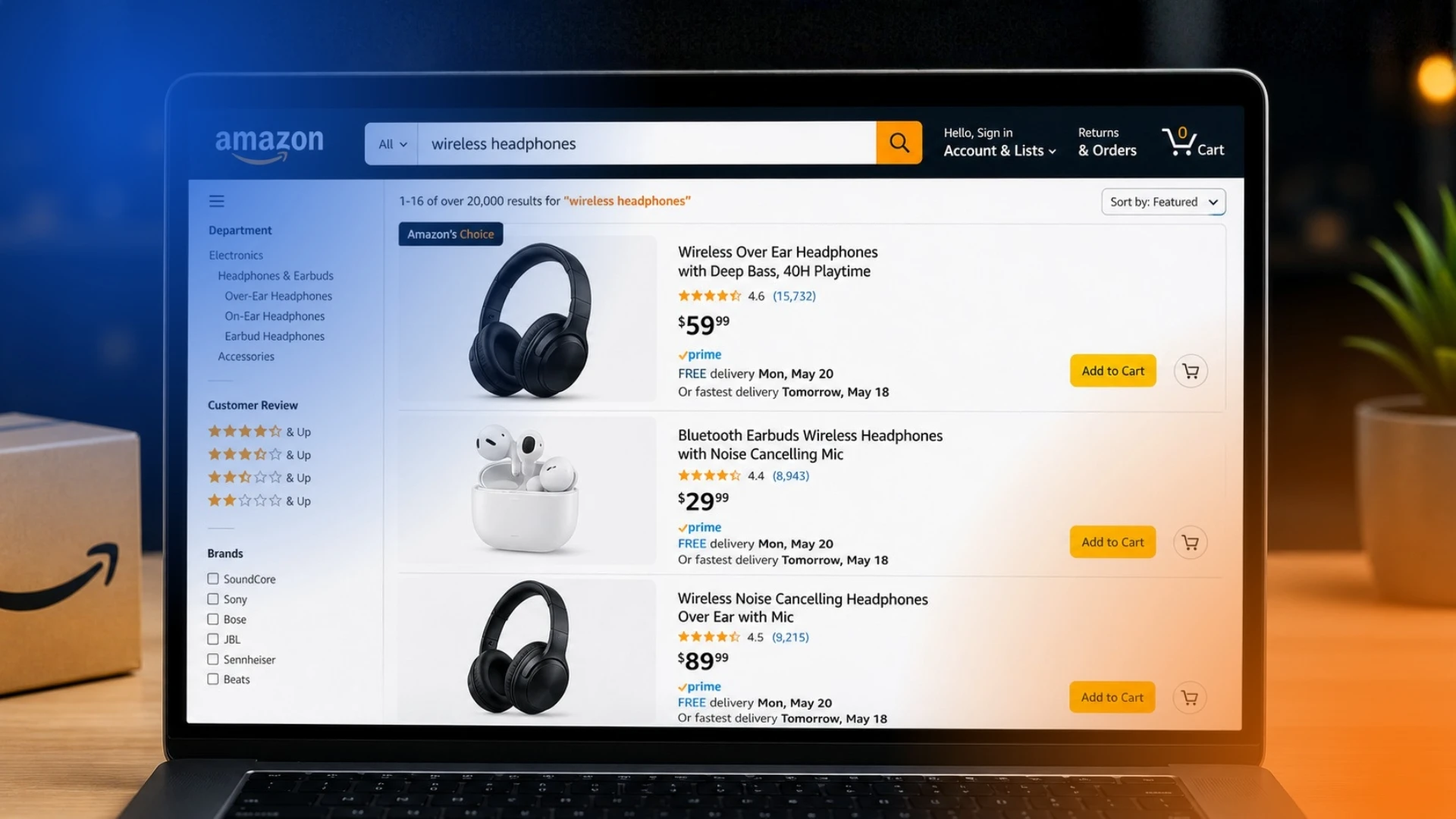
Understanding the Amazon product ranking algorithm is important because it helps you increase your conversion and sales rate.
Fix your conversion rate before you do anything else
If your unit session percentage is below 10%, no amount of keyword work or PPC spend will overcome that deficit.
Your main image, your price, your review count, and your bullet points are the primary causes of conversion.
Test different main images using Amazon's Manage Your Experiments tool if you have Brand Registry. Make sure your price is competitive for your category.
Enroll in the Request a Review program to build review volume. Rewrite your bullet points to focus on benefits and outcomes rather than features and specifications.
Build keyword coverage across your title, bullets, and backend
Your title should lead with your primary keyword and include the most important product attributes in a natural, readable format.
Your bullet points should cover secondary keywords while communicating benefits to a buyer.
Your backend search terms should include any relevant keywords that did not fit naturally into your content, including common misspellings, alternate product names, and related search terms.
Do not repeat keywords. Amazon only needs to index a keyword once.
Drive external traffic using Amazon Attribution tags
Set up Amazon Attribution in Seller Central, generate tracking tags for every external traffic source, and start building campaigns that drive converting traffic to your listings.
Enroll in the Brand Referral Bonus to earn approximately 10% on those external sales.
Use PPC strategically, not as a ranking substitute
Run PPC campaigns to build initial sales velocity for new products and to maintain visibility for competitive keywords.
Use your search term reports weekly to identify high-converting keywords and add them to your organic listing content.
Add converting search terms to your title and backend. Add non-converting search terms as negatives. Treat your PPC data as research for your organic strategy, not as a replacement for it.
Invest in A+ Content and listing quality
A+ Content improves conversion rate for most products and feeds the content signals that COSMO use to evaluate your listing's relevance.
Include a Brand Story, comparison modules, and lifestyle imagery that shows the product in use. Fill out every product attribute field in your listing template completely.
Final Thoughts
The Amazon ranking algorithm has been evolving since Amazon launched search, and it will keep evolving.
If you want help building an Amazon strategy that works with the algorithm, book a free consultation with Pro Marketer.
We work with ecommerce brands across every category to build the Amazon marketing systems that are profitable, sustainable, and drive ranking and revenue growth.
FAQs
1. What factors affect Amazon product ranking the most?
Conversion rate affects ranking the most.
The average conversion rate on Amazon is approximately 9.8%. Products converting above 15% are in the top tier for most categories.
After conversion rate, sales velocity, keyword relevance, external traffic, seller authority, click-through rate, price, reviews, FBA status, and inventory availability all contribute.
2. How can I improve my Amazon search ranking?
Start with your conversion rate. Fix your main image, price, review count, and bullet points before anything else.
Then audit your keyword coverage across your title, bullet points, and backend search terms. Run PPC to build velocity and use your search term data to improve your organic content.
3. Does Amazon use AI or machine learning to rank products?
Yes. Amazon has used machine learning in its ranking systems for years.
COSMO uses semantic intent understanding for search and recommendations, while Rufus, Amazon's generative AI shopping assistant, read your listings, reviews, and Q&A sections to recommend products through conversational search.
Traditional keyword search still accounts for approximately 80% to 85% of discovery traffic.
4. How often does Amazon update its ranking algorithm?
Amazon does not publish a schedule and does not announce most changes publicly. The system updates continuously through machine learning based on real-time platform data.
5. Does external traffic from Google, TikTok, or Meta ads affect Amazon ranking?
Yes. External traffic that converts on Amazon is one of the best ranking signals available in 2026.
External traffic is estimated to contribute approximately 15% to 20% to overall ranking authority. Amazon reinforces this through the Brand Referral Bonus, which pays an average credit of approximately 10% back on sales generated by tagged external traffic.
6. How long does it take for a new product to rank on Amazon?
Most new products need between 30 and 90 days of consistent sales activity before ranking for competitive keywords.
The fastest path is a combination of PPC campaigns for early velocity, the Request a Review program for review count, and competitive pricing for conversion rate.
Less competitive categories rank faster. Saturated categories can take six months or longer to reach page one.

.svg)

.avif)

.svg)