
TABLE OF CONTENTS
- Failing to Define Ideal Customer Profiles
- Inaccurate or Misleading Product Labelling
- Focusing Too Much on Scientific Claims
- Copying Competitors Instead of Building a Clear Position
- Launching Without Market Validation


Share via:
Why do many supplement brands still fail even when they use high-quality ingredients for their products? Well, because their supplement branding is weak and confusing.
Branding is no longer just about how your product looks. It is about trust, clarity, and how well your customers understand what you stand for.
If you are launching a new supplement brand or scaling an existing one, this will help you avoid costly errors.
In this article, we will walk you through the most common supplement branding mistakes to avoid in 2026.
1. Failing to Define Ideal Customer Profiles
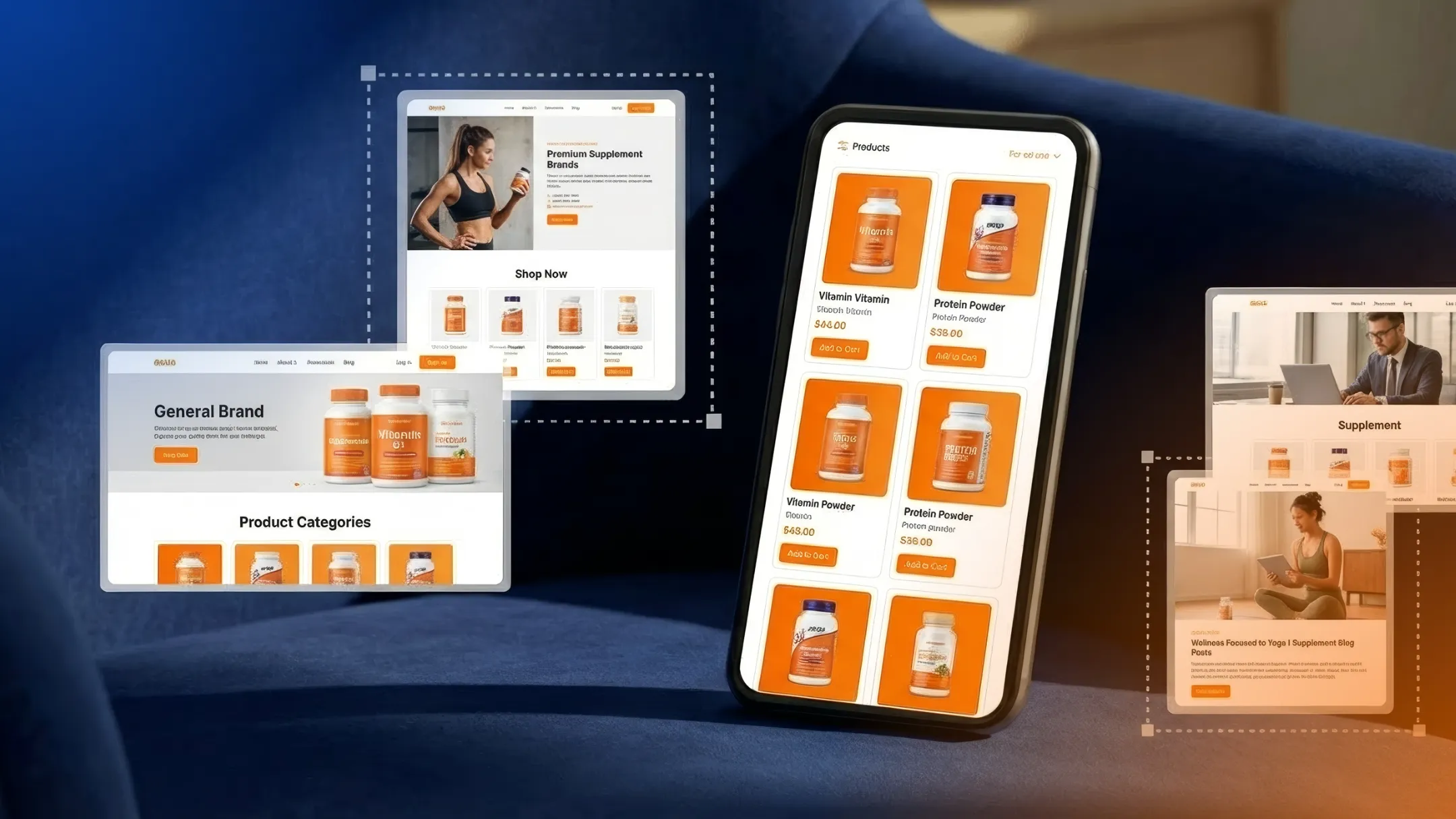
One of the biggest supplement branding mistakes is trying to sell to everyone. When you do this, you usually end up connecting with no one.
Many supplement brands say their product is for “men and women aged 18 to 65 who want better health.” Unfortunately, this is not an ideal customer profile.
People do not buy supplements like that. They buy products that feel made for them, their lifestyle, and their specific problem.
Without a clear supplement target audience segmentation, your entire business model will fall. Your messaging will sound generic. Your ads will not convert. Your packaging will feel unclear. Even your pricing strategy will be confusing, because you are not sure who you are really selling to.
A good supplement brand knows exactly who it is speaking to:
- Is your product for busy professionals who want daily energy without crashes?
- Is it for women managing hormonal balance?
- Is it for athletes focused on recovery and performance?
- Each audience needs a different language, visuals, proof points, and offers
When your ideal customer profiles are not defined early, you will rely solely on supplement trends or copy your competitors. This will lead to poor brand positioning and will make it hard to build a clear, unique selling proposition.
To avoid this mistake, you need to clearly answer a few basic questions before launching or scaling:
Who is this product for? What problem are you trying to solve? Why should your ideal customer trust your brand over others?
When you get this right, every part of your supplement brand identity becomes easier to build and easier for your customers to understand.
2. Inaccurate or Misleading Product Labelling
.webp)
Another costly supplement branding mistake is unclear or misleading product labelling. This is a legal and growth risk.
Many brands try to make their labels sound impressive by using big scientific words, bold claims, or vague ingredient descriptions. On the surface, this may look like a very good supplement branding design, but in reality, it creates confusion and doubt. When customers cannot clearly understand what is inside the bottle, they will hesitate to buy.
Poor labelling also creates problems with supplement label compliance. Supplement regulations require brands to be accurate, clear, and honest about ingredients, dosages, and intended use. When you exaggerate the benefits of your product or hide important details, you risk warnings or ad account restrictions. These issues can quickly slow down your direct-to-consumer supplement marketing efforts.
From a branding perspective, misleading labels reduce the trust your customers have in you. If your label is unclear or overly aggressive, it raises red flags. Even great visuals and premium packaging cannot fix that.
To build a strong supplement brand identity, use:
- Clear ingredient lists
- Honest benefit statements
- Easy-to-read layouts that help your customers feel confident in their purchase
This is what makes up a good supplement packaging design. Instead of focusing on looking good, you focus on making your information simple and transparent.
With good labelling, you can support your wellness brand positioning, strengthen your credibility, and reduce regulatory risk.
3. Focusing Too Much on Scientific Claims
.webp)
Everyone knows that science is important in supplements, but overloading your branding with scientific language can push your customers away. This is a common supplement branding mistake, especially for brands that want to sound credible.
Many supplement brands fill their websites, labels, and ads with complex ingredient names, lab terms, and study references. While this may impress industry insiders, it can also confuse your buyers. Most customers are not scientists. They want to know what the product does for them in simple, clear terms.
When you focus too much on science, you forget storytelling and emotional connection. Strong wellness brand positioning is built on:
- Clarity
- Relevance
- Ttrust
If your message feels hard to understand, people will scroll past it, even if the product is well formulated.
There is also a compliance risk. Scientific claims that sound like medical promises can create issues with supplement regulations. If your copy suggests that your product can treat, cure, or prevent disease, you may face problems with advertising platforms or regulatory bodies. This can hurt your direct-to-consumer supplement marketing and delay your growth.
So what should you do? You must learn how to balance. Use scientific proof to back up your unique selling proposition, but translate it into real-life benefits that your target audience understands. For example, instead of listing complex compound names, explain how the product helps with energy, focus, digestion, or recovery.
This approach helps you build a better supplement brand identity and keeps your message clear, compliant, and conversion-focused.
4. Copying Competitors Instead of Building a Clear Position

Many supplement brands look at what is already selling and try to copy it. Same colours. Same bottle shape. Same promises. This may feel like a safe move, but it is one of the fastest ways to weaken your supplement branding.
When your brand looks and sounds like everyone else, customers have no reason to choose you. Price becomes the only difference, and that leads to discounting, leaving you with thin profit margins.
Copying competitors also blurs your unique selling proposition. If your messaging, visuals, and tone are similar to those of other brands, customers cannot tell what makes you different.
This problem happens in supplement branding design and supplement packaging design. Brands follow trends without thinking about long-term identity.
Another risk is trust. When customers notice that multiple brands make the same claims and use the same visuals, skepticism increases. People begin to assume the products are interchangeable or low-quality.
The best way to avoid this is by focusing on clarity, not imitation. That means:
- Defining who you are for
- What problem you solve best
- Why your approach is different
Once that is clear, your branding, messaging, and pricing strategy can be built around it.
5. Launching Without Market Validation

One of the most expensive supplement branding mistakes is launching a product based on assumptions instead of real market feedback. Many brands fall in love with an idea before confirming that people actually want it.
Without market validation, you’ll end up guessing your supplement target audience segmentation, pricing strategy, and messaging. This will eventually lead to slow sales, poor reviews, and wasted advertising spend.
Market validation is not just about asking friends or running a small poll. It means testing demand, messaging, and offers before a full launch. This also includes:
- Pre-launch sign-ups
- Small paid advertising tests
- Landing pages
- Or limited product drops
Skipping validation also weakens wellness brand positioning. If you do not know why customers are buying, it becomes difficult to build a strong supplement brand identity.
Advertising platforms reward clear messaging and strong conversion signals. If your offer is unclear or unproven, your customer acquisition cost will increase, and your return on ad spend will drop quickly.
To prevent this, work with a skilled supplement branding agency that treats validation as part of the brand. They will test your ideas early, refine your positioning based on customer feedback, and help you launch with confidence.
It’s about time you stop building a supplement brand based on guesses. You should start building them based on data, clarity, and customer insight.
How to Avoid All Mistakes: Partner with Pro Marketer
Most supplement branding mistakes happen when brands try to do everything alone. Branding, compliance, positioning, pricing, packaging, and marketing.
To avoid these mistakes, you need a clear plan and the right partner.
At Pro Marketer, we do not treat supplement branding as just logos and colours. We look at the full picture. That includes supplement target audience segmentation, wellness brand positioning, pricing strategy, and how your brand will perform in real DTC supplement marketing environments.
We help brands:
- Define clear ideal customer profiles so messaging speaks to the right buyer
- Build a strong, unique selling proposition that is easy to understand and hard to copy
- Create compliant, clear labels that meet supplement regulations and support supplement label compliance
- Design packaging that looks premium but also explains the product clearly
- Develop a long-term supplement brand identity
- Align branding with pricing so your product is worth the price
- Validate ideas before launch to reduce risk and wasted spend
As a supplement branding agency, our goal is simple: help your brand grow without confusion, rebrands, or costly mistakes.
So, if you want to build a supplement brand that customers trust and keep buying from, this is where it starts.
FAQs
1. What makes supplement branding different from other direct to consumer products?
Supplement branding is built on trust and safety. Customers are putting the product into their body, so they pay more attention to labels, ingredients, and transparency. Brands must also follow strict supplement regulations, which makes messaging and branding more sensitive than other product categories.
2. How can you differentiate your supplement brand in 2026?
You can differentiate your supplement brand by being clear. Strong wellness brand positioning, a clear, unique selling proposition, and honest messaging help brands stand out. Knowing your exact target audience and being consistent across packaging, pricing, and marketing is what will make you the most money in 2026.
3. How do Food and Drug Administration regulations impact supplement labels?
The Food and Drug Administration requires accurate ingredient lists and limits health claims on supplement labels. Brands must avoid disease treatment claims and follow labelling rules to stay compliant. Good supplement label compliance protects your brand and builds long-term trust.

.svg)

.avif)

.svg)