
TABLE OF CONTENTS
What Is Augmented Reality in the Beauty Industry?
How Is Augmented Reality (AR) Used in the Beauty Industry?
Skin analysis and personalized skincare
AR beauty filters for marketing
What Are the Benefits of Augmented Reality in Beauty?
Real Brands Using Augmented Reality in the Beauty Industry


Share via:
Quick Answer: Augmented reality in the beauty industry lets shoppers virtually try on makeup, hair colour, skincare, and more before they buy, using nothing but their phone camera.
Beauty has always been personal. What works on one person wouldn’t work on another. And unfortunately, this is one of the major challenges of selling beauty products online.
A product page can show you the shade. But it cannot show you how it looks on your face, with your skin tone, your undertones, and your features.
Well, the good news is that augmented reality (AR) is here to solve that problem. In this blog, we’ll explain how it does that.
What Is Augmented Reality in the Beauty Industry?
You know those filters on Instagram and Snapchat that can change your hair colour or put sunglasses on your face? That is what augmented reality is, only much more accurate and useful for shopping.
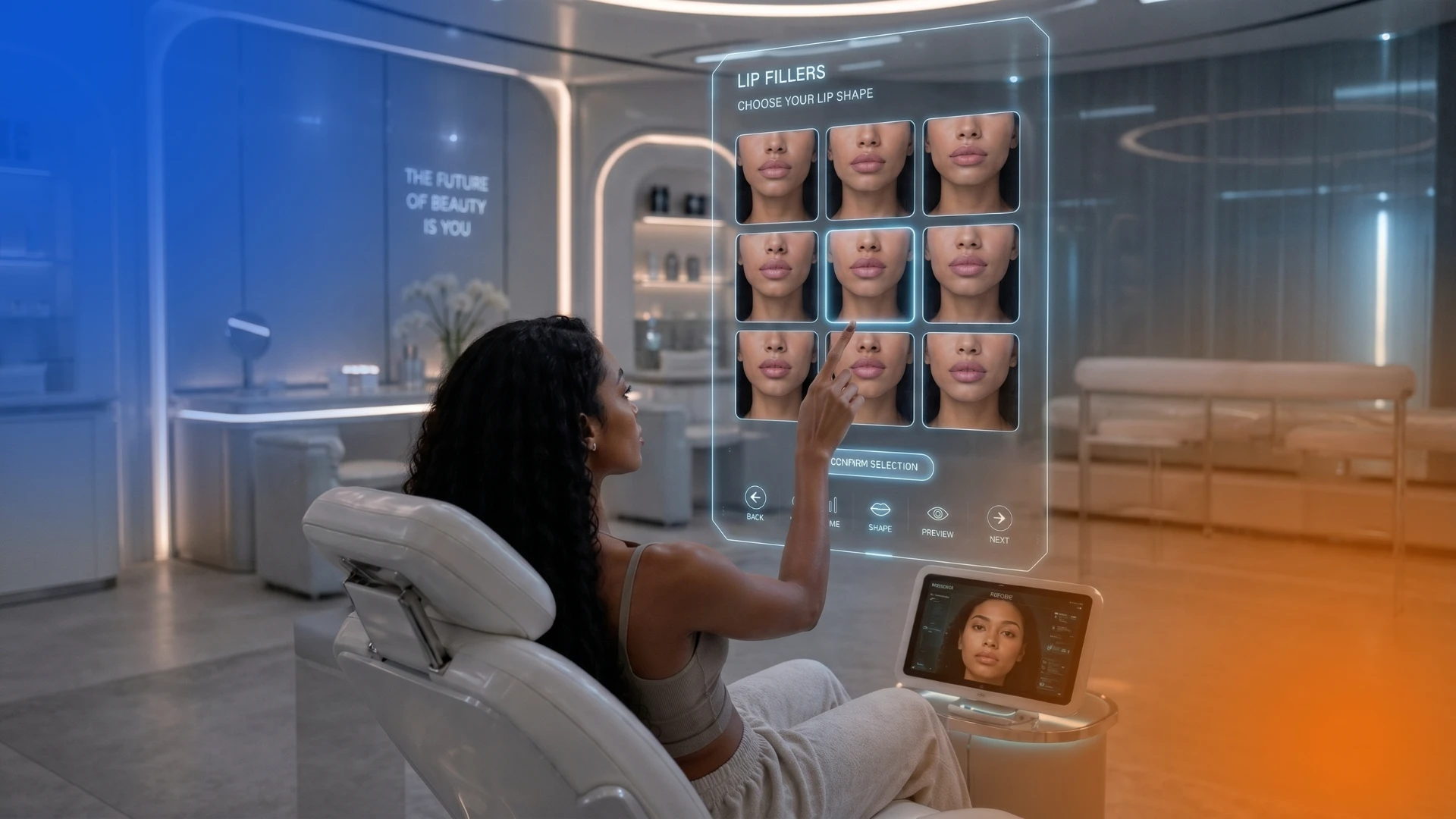
Here’s how it works in the beauty industry: You open your phone camera, point it at your face, and virtually try on a lipstick shade, a foundation colour, or even a completely different hair colour. All on your actual face, with your features, before you spend a single dollar.
The technology works this way:
- First, it uses face tracking to precisely map your facial features: It detects hundreds of points across your face, the curve of your lips, the shape of your eyes, and the contours of your cheeks, so that whatever product is placed on your face moves naturally when you turn your head, smile, or blink
- Second, it uses computer vision to place the virtual product onto the mapped features: It adjusts for your lighting, skin tone, and movement in real time. So if you are sitting by a window with natural light coming in, the lipstick shade reflects that light the way a real lipstick would. If you turn your head, the product moves with you
- Third, AI-powered analysis reads your specific skin tone, undertone, and texture: This means the technology is not showing you what a product looks like on a generic face. It is showing you what it looks like on your face, with your unique features and colouring
This shows that augmented reality in the beauty industry gives shoppers a way to make confident, informed decisions online, the same way they would in a store, but without leaving their couch.
How Is Augmented Reality (AR) Used in the Beauty Industry?
%20Used%20in%20the%20Beauty%20Industry.webp)
There are several ways beauty brands are using this technology right now. Here are some of those ways:
Virtual makeup try-on
You can now see how a lipstick, foundation, blush, or eyeshadow looks on your face in real time.
Sephora launched its Virtual Artist AR try-on tool and saw its revenue grow by 11% in the very next quarter. That tells you everything you need to know about how much consumers love this feature.
AR hair colour try-on
We all know someone who dyed their hair a completely different colour and immediately regretted it. AR hair colour try-on exists to prevent exactly that.
L'Oreal's virtual hair colour app lets you upload a photo and see a realistic transformation before you make any changes.
Garnier's tool even recommends shades based on your complexion.
Skin analysis and personalized skincare
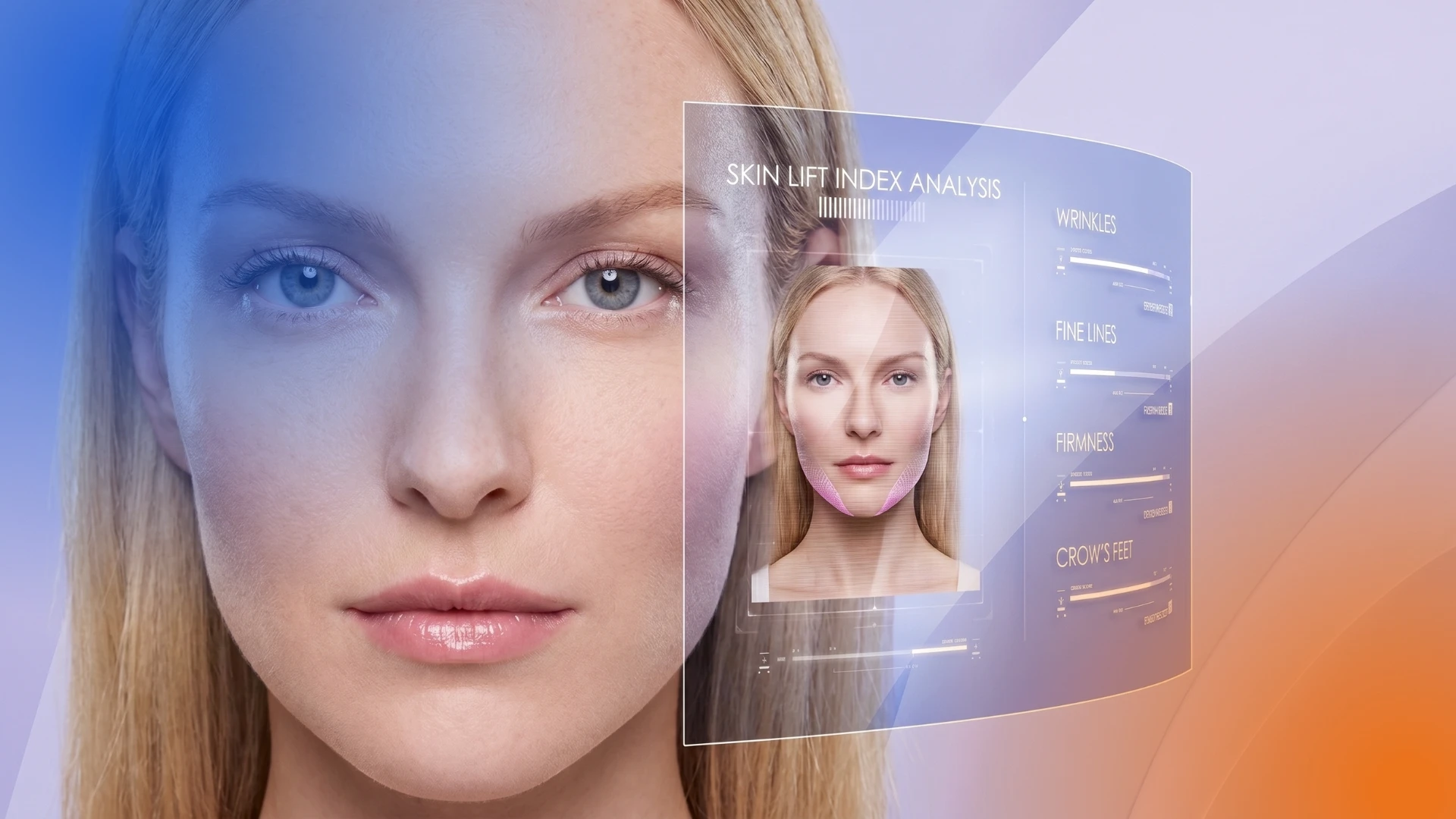
AI-powered skin analysis tools scan your face using your camera and assess factors like hydration levels, pigmentation, fine lines, and texture.
L'Oreal's SkinConsult AI does this and then recommends a fully personalized skincare routine based on its findings.
Clinique does something similar with their Clinical Reality app, which gives you a 30-second skin scan and suggests products customized to your specific concerns. It's like having a dermatologist in your pocket.
Foundation shade matching
A 2023 survey in online beauty shopping found that 60% of beauty consumers say finding the right shade is the hardest part of buying cosmetics online.
AR shade-matching tools fix this by reading your skin tone and undertone, then showing you exactly how different shades look on your face.
No more buying three foundations and returning two of them.
In-store AR mirrors
Augmented reality (AR) beauty is not just for online shopping alone. Sephora has AR mirrors in its stores that let customers tap through hundreds of shades and see them on their face instantly, without applying a single thing.
This means your customers no longer have to wipe down testers or wait for a beauty consultant to be available. All your customers have to do is simply tap the mirror and test multiple items.
AR beauty filters for marketing
You have probably seen these on TikTok or Instagram without even realizing it.
When a beauty brand creates a filter that lets you try on their new lipstick collection, and you share it with your followers, that is augmented reality.
Mugler set up AR mirrors in airports and shopping malls to promote a fragrance launch. People walking past could virtually try the experience and share it.
AR-powered visual search
If your favourite foundation gets discontinued, AR-powered visual search lets you snap a photo of the product and instantly find similar alternatives.
Google has partnered with L'Oreal, Estée Lauder, and MAC Cosmetics so users can even virtually try on products that appear directly in their search results.
What Are the Benefits of Augmented Reality in Beauty?
Now that you know what it does, let's look at why it matters for beauty product buyers and for brands.
For consumers:
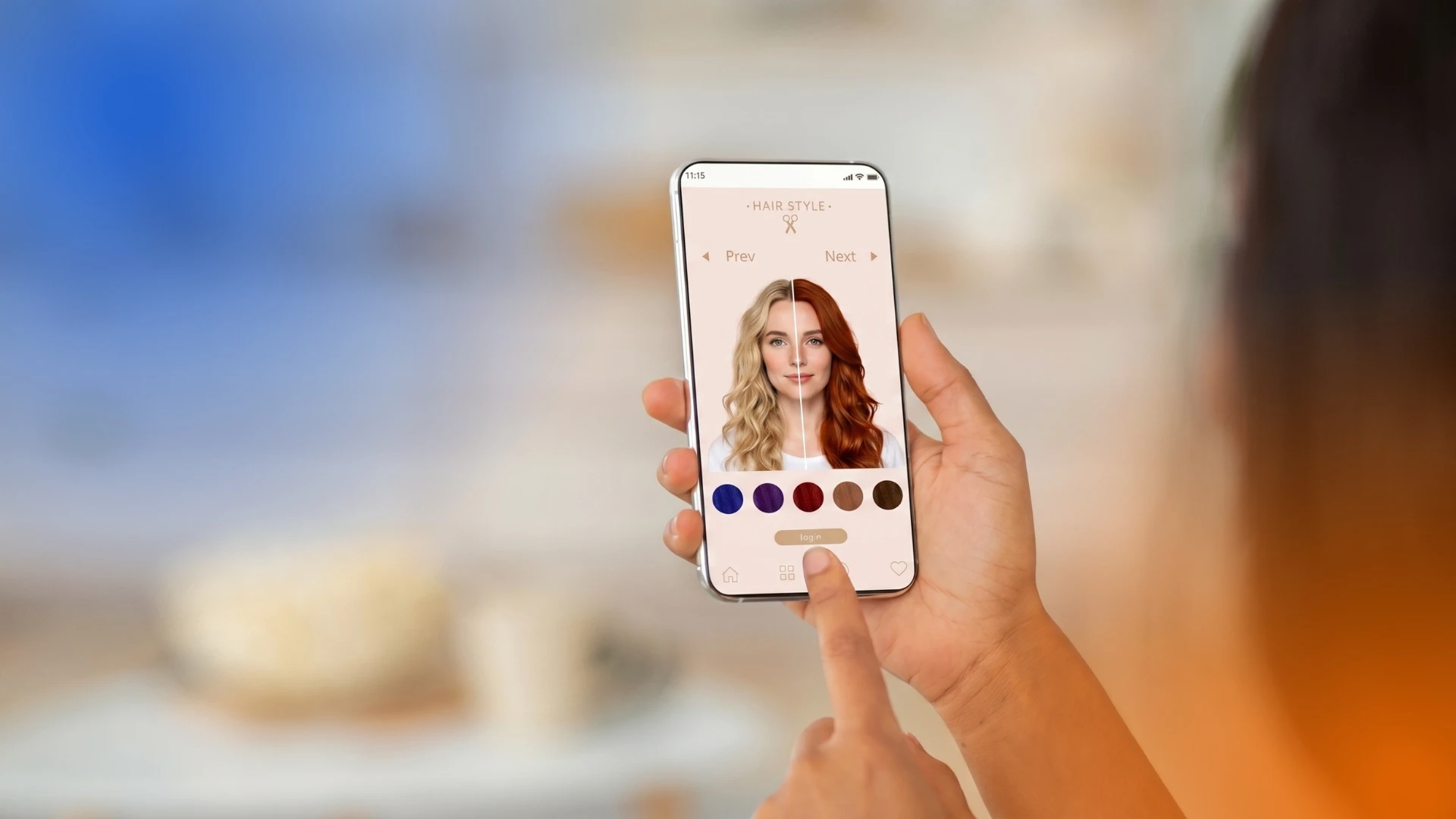
The biggest one is confidence. When you can see exactly how a product looks on your own face, in your own lighting, with your own features, you buy with so much more certainty.
It also solves the hygiene problem. Since 2020, nobody really wants to share testers with strangers. Virtual try-on means you can test as many products as you want without touching anything.
And then there is the personalization factor. AI-powered tools do not just show you what a product looks like. They show you what it looks like on you, with your specific skin tone, undertone, and features. That is a completely different experience from looking at a product photo on a model who looks nothing like you.
For beauty brands:
Shopify data show that products with AR interactions have up to 94% higher conversion rates than those without.
Returns drop too. In online beauty, 52% of returns are due to shade mismatch. When customers can see exactly what they are getting before they buy, the problem would no longer exist.
Banuba has seen brands cut returns by up to 60% after adding virtual try-on to their store.
Also, your customers stay on your website longer. Deloitte found that users spend 2.7 times more time engaging with AR content than with regular product pages.
More time on your website means more opportunities to discover products and add to cart.
Real Brands Using Augmented Reality in the Beauty Industry
It is one thing to talk about the technology. It is another to see how real brands are actually using it to grow their business. Here are some of the best examples of augmented reality beauty technology in action.
Sephora
Sephora is one of the earliest and most successful adopters of augmented reality technology for the beauty industry.
Their Virtual Artist tool lets shoppers virtually try on thousands of products directly through the Sephora app using virtual makeup try-on technology.
Customers can test lipsticks, eyeshadows, false lashes, and more in real time using face tracking technology.
The result was an 11% increase in revenue in the quarter immediately following the launch.
Sephora also has AR mirrors in its physical stores, so the experience is consistent whether a customer is shopping from their couch or walking into a store.
L'Oreal
L'Oreal has invested heavily in beauty technology across multiple product categories. Their virtual hair colour try-on app lets users test hundreds of hair shades on an uploaded photo using realistic AR rendering.
Their SkinConsult AI tool scans a selfie for signs of aging and builds a personalized skincare routine around what it finds.
And through their partnership with ModiFace, one of the most advanced face tracking technology beauty platforms available, L'Oreal has integrated AR try-on directly into retail partner websites and Google search results.
When you search for a L'Oreal lipstick on Google, you can try it on right there in the search page.
Avon
Avon partnered with Perfect Corp and o9 Solutions to introduce AI and augmented reality beauty tools into their shopping experience.
Conversions increased by 320%, and average order value increased by 33%.
For a brand with a large direct sales model, giving consultants and customers the ability to try products virtually before buying changed the entire dynamic of how products were discovered and purchased.
Burberry Beauty
Burberry's Virtual Studio is one of the most sophisticated examples of virtual makeup try-on technology available today.
Using face tracking technology that maps over 100 points on a user's face, the tool creates hyper-realistic product try-ons that move naturally with every expression.
It also provides personalized 3D tutorials placed directly on the user's face, showing exactly where to apply each product based on their unique features.
It turns a product page into a personalized beauty lesson.
Garnier
Garnier's AR hair colour try-on tool, combined with its Shade Selector Quiz, is a great example of an augmented reality beauty filter.
Users either upload a photo or scan their face live, choose from a wide range of hair colours, and see a transformation in real time.
The quiz, on the other hand, recommends shades based on the customer's skin tone and undertone.
Can Small Beauty Brands Afford AR Technology?
Building a custom AR app from scratch is expensive. Costs can range anywhere from $10,000 to $800,000, depending on the complexity of the AR. For most independent or emerging beauty brands, that is not a realistic investment.
But there is good news: you do not need to build anything from scratch.
There are established AR platforms that can plug directly into your existing ecommerce store. Tools like ModiFace, Perfect Corp, and MIRRAR provide beauty brands access to:
- Virtual makeup try-on technology
- Shade-matching foundation AI
- And augmented reality beauty filters
Pricing models differ. Some charge based on the number of try-ons. Others charge an annual fee or a per-use rate.
For a beauty brand selling through Shopify, integrating one of these platforms is a better option than custom development, at a fraction of the cost.
You do not need to launch a full AR suite:
- Start with a virtual makeup try-on for your best-selling products
- See how it affects your conversion rate and return rate
- Use that data to expand the technology across your full catalogue
Not sure where to start? A skincare marketing agency that specializes in ecommerce can help you evaluate platforms, set benchmarks, and build AR into a broader conversion strategy without wasting budget on tools that don't fit your catalogue.
Final Thoughts
Augmented reality is changing how beauty products are discovered, tried, and bought.
It solves one of the oldest problems in online beauty retail. The fact that a product page can show you a shade but cannot show you how it looks on your face.
So, if you are building or scaling a beauty brand and want to make sure your ecommerce strategy is set up to grow with the market, book a free consultation with Pro Marketer.
We work with beauty and ecommerce brands at every stage of growth and will show you exactly what needs to happen to turn your market opportunity into a scalable, profitable business.
FAQs
1. What is augmented reality in the beauty industry?
Augmented reality in the beauty industry is a technology that lets shoppers virtually try on beauty products before they buy them.
Using their phone camera or a smart mirror, customers can see how a lipstick shade, foundation colour, hair colour, or skincare product looks on their actual face, with their features, in real time.
It closes the gap between browsing a product online and knowing how it will look on you. Brands like Sephora, L'Oreal, and Avon are already using it as a part of their shopping experience.
2. Does augmented reality in beauty increase sales?
Yes, it does. Shopify data show that products with Augmented Reality (AR) interactions convert at up to 94% higher rates than those without.
Banuba's internal data shows conversions can increase by up to 300% after integrating virtual try-on. Avon saw a 320% increase in conversions and a 33% boost in average order value after introducing AR into their shopping experience.
3. What is the future of augmented reality in the beauty industry?
The future of augmented reality in the beauty industry is heading toward smarter personalization, more immersive experiences, and seamless omnichannel integration.
AI will get better at reading individual features, making shade-matching foundation AI more precise and skin analysis more accurate.
The global virtual try-on market is projected to grow from $15.18 billion in 2025 to $48.10 billion by 2030, at a CAGR of almost 26%.
4. Can small beauty brands afford AR technology?
Yes. Building a custom AR app from scratch can cost anywhere from $10,000 to $800,000, which is not realistic for most independent beauty brands.
But there are established platforms like ModiFace, Perfect Corp, and MIRRAR that plug directly into your existing ecommerce store at a fraction of that cost.
Some charge based on the number of try-ons. Others charge an annual fee. For a beauty brand selling through Shopify, integrating one of these tools is a more affordable option.

.svg)

.avif)

.svg)