
TABLE OF CONTENTS
Trend 1: Skin Longevity Has Taken the Place of Anti-Aging
Trend 2: Biotech Beauty Is Becoming the New Standard
Trend 3: Exosomes Are Going Mainstream
Trend 4: Neurocosmetics and Sensory Skincare Are Gaining Traction
Trend 5: Hyper-Personalization Is Shaping Product Selection
Trend 6: Barrier-First and Climate-Adaptive Skincare Is the Baseline


Share via:
If you remember correctly, not long ago, skincare brands could easily attract customers with a single promise. Brighter skin. Fewer wrinkles. That was often enough to get someone to click, add to cart, and try a product.
But that’s no longer the case.
Skincare buyers now want to understand why a product exists, not just what it claims to do. They look at ingredient concentrations. They ask who the product is meant for. They think about whether it fits into a routine they can stick to, not just a result they hope to see.
As a result of this, the market is moving away from fast trends toward credibility, clarity, and consistency.
In this article, we’ll show you the latest skincare trends and how you can adjust your products, messaging, and growth strategies to keep up with the trends.
What’s Changing in Skincare
The global skincare market is projected to reach $189 billion by the end of 2026, with a 6.8% annual growth rate.
The fastest growth is happening in the following categories:
- Biotech-led formulas
- Personalized routines
- Stress-related skin care
All these product types are growing faster than basic, one-off products. In fact, around 72% of buyers say product performance is the main reason they choose one skincare product over another.
This simply means that the skincare buyer in 2026 is not easily impressed. They want proof. They want clarity. And they want brands to show their work.
They expect brands to explain where ingredients come from and how products are made, sometimes down to the source level. Vague claims and polished branding without substance no longer work.
Gen Z buyers are now prioritizing mental well-being and brand values. They care about how skincare fits into their emotional and mental state, not just how it changes their skin.
Millennials, on the other hand, are more focused on clinical results. They want to know that a product works, how it was tested, and what evidence supports it. They still care about sustainability, but performance and reliability tend to come first.
Price is important to both groups, but for different reasons. Gen Z is more value-conscious and selective, while Millennials are willing to pay more when the product is proven and dependable.
Let’s now explore some of the latest skincare trends of 2026.
Trend 1: Skin Longevity Has Taken the Place of Anti-Aging
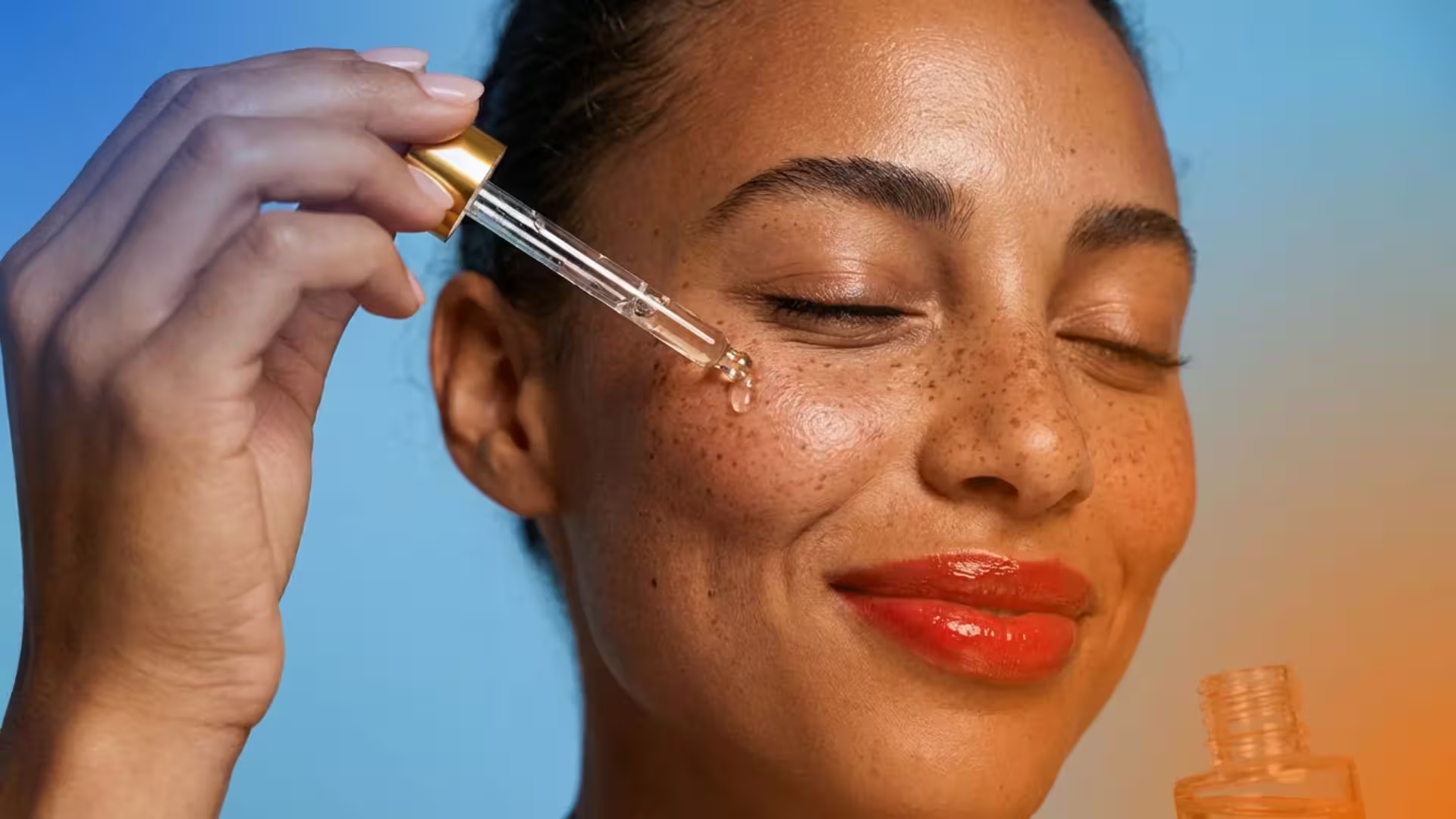
“Anti-aging” used to be the default language in skincare. It referred to aging as something to fight or reverse. That framing no longer resonates with many buyers. It feels unrealistic, and in many cases, misleading and even offensive.
Now, instead of asking how fast a product can smooth lines or brighten skin, buyers are asking different questions about longevity.
- Will this help my skin stay stable over time?
- Will it protect my barrier?
- Can I use it every day without irritation?
Longevity focuses on keeping your skin healthy for longer rather than forcing dramatic changes. It values consistency over intensity. Gentle routines over aggressive treatments.
This is why products designed for long-term use are gaining more trust than products built for instant results. Buyers are more cautious now. Many have already experienced over-exfoliation, barrier damage, or sensitivity from using strong actives.
Longevity also changes how people judge ingredients. Instead of looking for the strongest percentage, they look for ingredients that support hydration, calm inflammation, and reduce stress on the skin.
As a skincare brand, this trend means that you need a shift in your messaging.
Language like “fight,” “reverse,” or “erase” should be replaced with words like “support,” “protect,” and “maintain.” This positions your products as part of a routine someone can stick with for months or years.
Trend 2: Biotech Beauty Is Becoming the New Standard

A few years ago, “clean beauty” was the big thing. Brands tried to sound natural. They avoided anything that looked too “lab-made.”
Well, that has changed.
Biotech beauty is becoming the new standard. This is where skincare uses science to make ingredients that are safer, more consistent, and more effective.
This change is occurring because buyers are requesting more evidence. They don’t just want a nice story. They want products that can deliver results. And they want the same results from every bottle they buy.
Biotech ingredients help with that because they can be made in controlled conditions. One of the biggest biotech changes is precision fermentation. Instead of extracting an ingredient from tons of plants, brands can use engineered microbes like yeast or bacteria to produce a specific ingredient in a lab.
Using biotech ingredients can:
- Reduce environmental impact compared to harvesting large amounts of raw materials
- Create cleaner, more consistent ingredients
- Make it easier to scale high-performance ingredients through specialized manufacturers
This is also why more brands are using biotech actives like peptides, fermented ingredients, bio-identical collagen, and lab-made versions of ingredients like squalane.
Biotech beauty works best when you explain it in plain language. Buyers don’t need a science lecture. They just want to know:
- Why this ingredient is safer or more reliable
- What it helps with
- Why it is worth paying for
Trend 3: Exosomes Are Going Mainstream
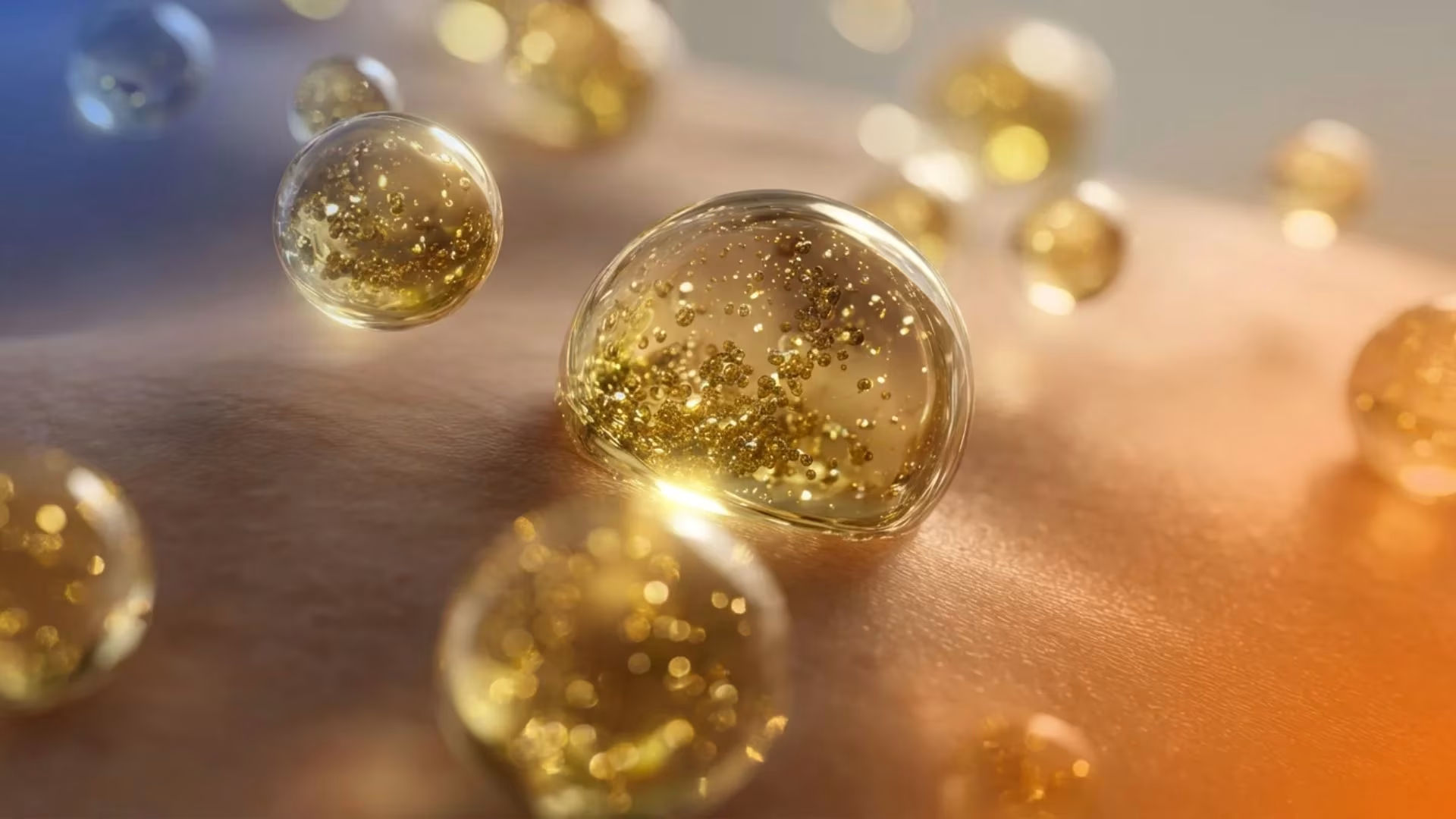
Exosomes are becoming popular lately.
They are usually described as tiny “messengers” that help cells communicate. In clinical settings, people talk about their potential for repair and regeneration. That is why they are getting so much attention in beauty.
But for direct-to-consumer skincare brands, exosomes are a risk.
The biggest issue is regulation. As of 2026, there are zero Food and Drug Administration-approved exosome products for anti-aging or cosmetic use. That means brands cannot market exosomes like a medical treatment. If your copy starts talking about “regeneration,” “repairing cellular damage,” or anything that sounds like changing how the body works, you are stepping into drug-claim territory. And that is where enforcement can happen.
So what are brands doing instead?
Many are moving toward safer positioning by using plant-based options like phyto-exosomes and polydeoxyribonucleotide-based ingredients. They are shifting the focus away from “stem cell therapy” language and moving toward safer cosmetic wording like “signaling,” “communication,” and “revitalization.”
There is also a business side to this trend that brands cannot ignore.
These ingredients are fragile. They need special handling, better stabilization, and more complex sourcing. That usually means a higher cost of goods sold and a more complicated supply chain than standard skincare ingredients.
So yes, the opportunity is real. But it is not simple.
Here’s what to do as a skincare brand:
- Avoid using “regenerative” or “cell repair” language
- Use phyto-exosomes and polydeoxyribonucleotide-based positioning
- Plan ahead for the higher cost of goods sold and more complex supply chains
Trend 4: Neurocosmetics and Sensory Skincare Are Gaining Traction

More buyers are starting to link their skin to how they feel every day. If they’re stressed, their skin reacts. If they’re not sleeping well, their skin looks tired. If they’re overwhelmed, they want products that calm their skin.
This is why neurocosmetics and sensory skincare are gaining popularity among buyers.
The idea behind this is simple. The skin and the nervous system are connected through the skin-brain axis. So brands are creating products that focus on comfort, mood, and the “feel” of the routine.
This matters because stress, inflammation, and sensitivity are now big concerns for a lot of people. Many buyers are dealing with reactive skin. They want routines that help them feel relaxed, instead of tight or irritated.
So, how do you create this type of sensory skincare routine?
By creating and selling formulas that are designed to calm the skin. Things like soothing textures, gentle mists, and comfort serums that contain active ingredients like peptides and adaptogens.
But you have to be careful with how they talk about these skincare routines.
Neurocosmetics can easily sound like medicine if the claims go too far. The safe lane is to focus on sensation and appearance, not mental health. So instead of saying a product “reduces anxiety” or “treats stress,” stick to language like:
- “Comforts stressed-looking skin”
- “Helps skin feel calmer”
- “Soothes visible redness”
- “Creates a relaxing routine”
The best way to implement this growing trend is to treat it like a routine shift, not a claim shift.
Trend 5: Hyper-Personalization Is Shaping Product Selection
People no longer believe in the “one routine fits all” narrative.
Right now, buyers expect you to help them pick the right products. That’s why personalization is becoming part of the shopping funnel.
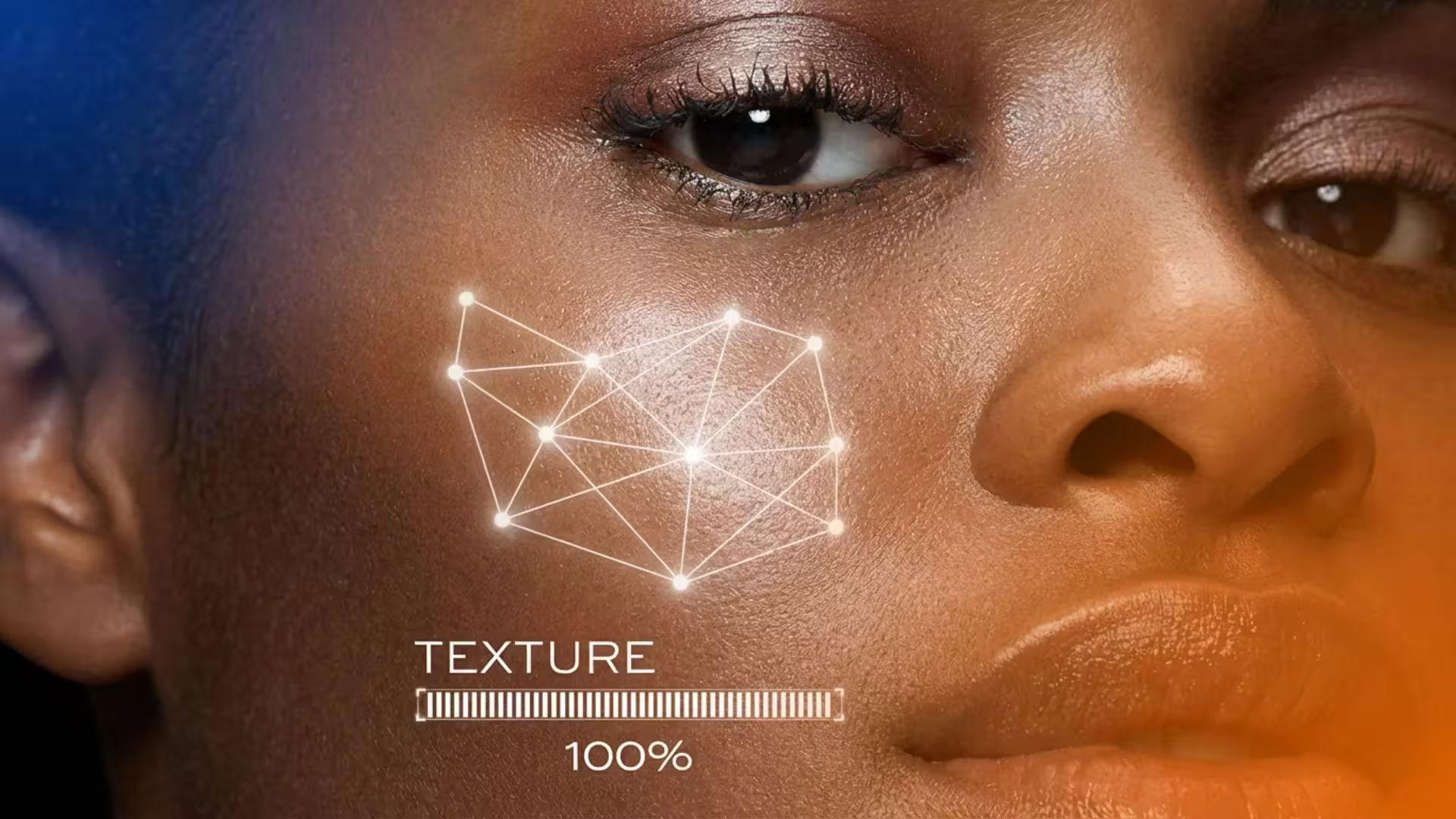
With AI skin diagnostics, you can now shape product selection. Instead of asking people to answer a few questions and hope they’re honest, you can use visual checks to guide their choices.
For instance, you can use a selfie scan to detect issues like dryness, uneven tone, and texture, then recommend a routine that matches the buyer's needs.
When your buyers feel like the routine was made for them, they trust it more. They buy more confidently. And they’re more likely to stick with your product.
This is why personalization can increase:
- Conversion (more people complete the purchase)
- Average Order Value (people buy complete packages, instead of single products)
- Retention (they stay longer)
- And reduce returns (less regret, less trial-and-error)
To implement hyperpersonalization into your brand, here’s what you should do:
- Add AI skin analysis to your services. Make it a part of the buying journey.
- Move from quizzes to visual diagnostics. Quizzes still help, but scans feel more real to the buyer.
Lastly, treat personalization like a service, not a feature. That means the buyer shouldn’t feel like they’re just taking a test. They should feel guided, like the brand is helping them build a routine suited just for them.
Trend 6: Barrier-First and Climate-Adaptive Skincare Is the Baseline
“Barrier repair” is not a special product line anymore.
It’s actually the minimum.
Buyers have been burned too many times by harsh routines, including over-exfoliation and strong acids. If you add the climate stress, heat, dry air, humidity swings, and pollution, you’d come to understand why people now shop for comfort and stability.
Barrier-first skincare is becoming the default expectation. Climate-adaptive skincare is also gaining popularity because skin reacts differently depending on where someone lives and the weather conditions.
So, instead of “Which active is trending?” the new question is: “Will this protect my skin and keep it calm?”
Here are some things you can do to tap into this trend:
- Default to microbiome-supportive formulas: Start using more prebiotics and postbiotics, especially ferment-based ingredients, to support the skin’s natural balance
- Reduce reliance on harsh actives: This doesn’t mean “no actives.” It simply means less of the aggressive stuff that harms the skin
- Build multifunctional sun care: Today, sunscreen is not just “SPF.” The expectation is skincare first, SPF second. Buyers want sun protection that also feels like a daily moisturizer, with added support ingredients like niacinamide, peptides, and antioxidants
Trend 7: Continuity Is the New Growth Model
For years, brands grew by chasing attention. A viral video. A big launch. A dramatic before-and-after photo. However, this strategy is no longer reliable in 2026.
Buyers are tired of jumping from product to product. They want fewer experiments and more stability. When something works, they want to keep using it.
That’s why continuity is becoming the main growth model.
If you focus on daily care and long-term use, you’ll perform better than brands that focus on making quick sales. A routine someone uses for months is more valuable than a product they try once and forget.
This strategy changes how brands think about growth. It now means that:
- Retention matters more than reach
- Reorders matter more than first-time purchases
- Subscriptions, refills, and routine bundles are now important
They are how brands stay relevant.
Also, keep in mind that continuity rewards honesty. Your buyers don’t expect overnight results anymore. They want realistic timelines and products they can trust long term.
Now Is the Time for a DTC Strategy Shift
Buyers are more informed. They ask better questions. They care about how your products work, how they fit into daily life, and whether they can trust the brand behind them. Fast beauty, loud promises, and quick fixes are losing their appeal.
To succeed as a skincare brand in 2026, you must focus on community events rather than influencers and ads.
Use biotechnology carefully, personalize your routines with purpose, design products that support the skin barrier in real-world conditions, and wisely allocate your budget. Doing this will help you build products people can use every day.If you need help scaling your skincare brand, book a free consultation with us to get started.
Resources:
- 2026 skincare and beauty forecast: Data-driven insights | in-cosmetics Connect, accessed January 12, 2026, https://connect.in-cosmetics.com/trends-en/2026-skincare-and-beauty-forecast-data-driven-insights/
- 2026: Where Beauty Gets Smarter, Softer & More Soulful - Happi, accessed January 12, 2026, https://www.happi.com/exclusives/2026-where-beauty-gets-smarter-softer-more-soulful/
- 12 K-Beauty trends in 2026 that you should know about - Yeppo & Soonsoo Sweden, accessed January 12, 2026, https://yepposoonsoo.se/en/blogs/articles/12-k-beauty-trender-ar-2026-som-du-bor-kanna-till
- Beauty in 2026: Neurocosmetics and inclusivity define cosmetic trends, accessed January 12, 2026, https://www.personalcareinsights.com/news/2026-beauty-trends-inclusivity-neurocosmetics.html
- How Longevity Science Is Reshaping Beauty & Wellness in 2026 - Evolut Agency, accessed January 12, 2026, https://evolutagency.com/longevity-science/

.svg)

.avif)

.svg)